



A Fairytale Wedding in Chennai, India
A Fairytale Wedding in Chennai, India
Because It Was Real
Some weddings are impressive.
Others are unforgettable.
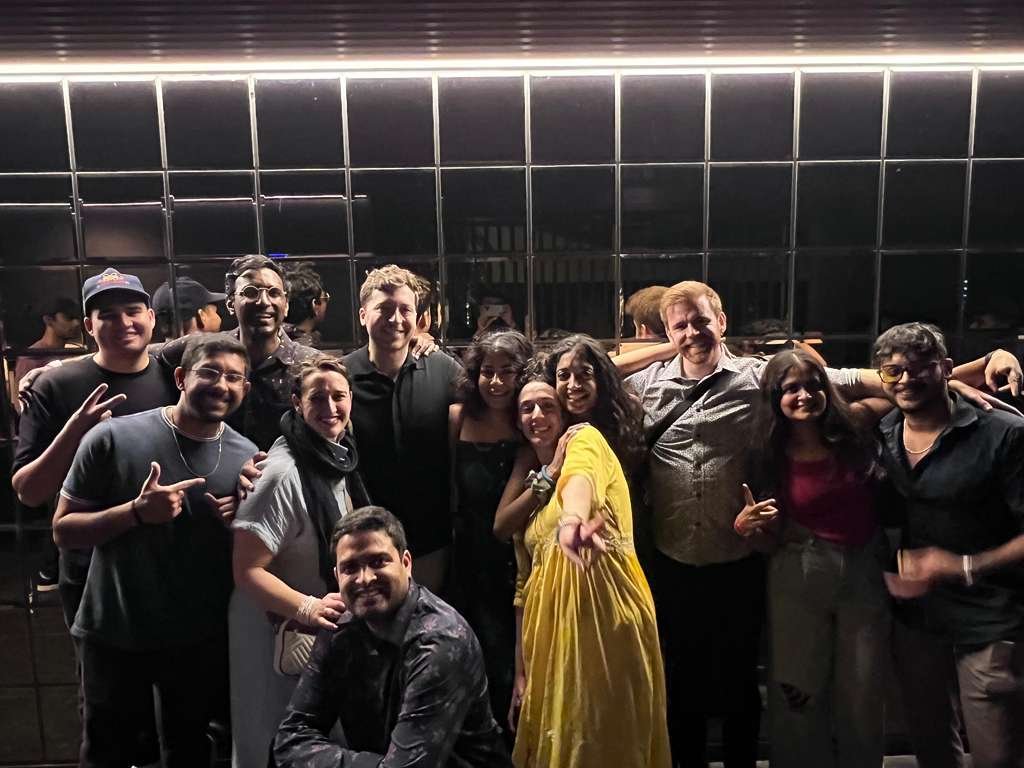
Hari and Rachel’s wedding in Chennai, India was nothing short of a fairytale, not because of scale or spectacle, but because of the care, intention, and community that surrounded every moment.
It unfolded over several days, each layered with meaning, tradition, and a generosity of spirit that could be felt from the moment we arrived.
The first day carried a quiet freedom. Guests were encouraged to explore Chennai at their own pace, easing into the rhythm of the city and the celebration. That freedom flowed naturally into intimate family gatherings filled with food, music, and conversation. Homes were opened. Tables were filled. Hands were adorned with henna. Stories were shared late into the evening.
What stood out most wasn’t just the beauty of the ceremonies, but the way everyone came together. Family, friends, elders, neighbors, and staff moved seamlessly, each playing a role in honoring the couple.
One of the most unforgettable moments was the Janavasam. As Hari arrived at the hotel doors, the drums erupted. He paused them, restarted them, built anticipation, then sent the rhythm surging again. He didn’t just arrive, he conducted the moment. Cheers, laughter, and energy rippled through the crowd. It was joyful, spontaneous, and deeply rooted in tradition all at once.
Hari’s tuk tuk carried him straight to the front door for his formal introduction to the family. Riding proudly beside him were his new nephew, Mathew, and niece, Mia. When they appeared, the crowd roared, not out of formality, but pure joy. In that instant, you could feel family, legacy, and celebration colliding in real time.
Throughout the days, there was an almost effortless flow of generosity. People appeared exactly when needed, guiding, serving, welcoming, celebrating. It never felt like an event being managed. It felt like a living tradition in motion, instinctively knowing how to care for both its guests and its family.
The wedding day itself began early at 7:00 a.m., with the bride’s parents and sisters arriving as early as 4:00 a.m. to begin preparing. The day unfolded reverently and unhurried. Guests moved naturally between quiet reflection and shared joy, between food and music, ceremony and celebration. There was no rush, no pressure, just presence.
By evening, the Sangeet transformed everything into pure celebration. Music, dancing, laughter, and memory making filled the space, carrying late into the night and closing the circle of days spent together.
By the end, it was clear this wasn’t just a wedding. It was a collective act of love. A family supported by an entire community, creating something timeless for Hari and Rachel. Not extravagant for show, but abundant in care, tradition, and heart.
What I’ll always remember most are the smiles, the joy, and the remarkable people of India we were fortunate enough to meet. This wasn’t just a destination wedding. It was a reminder of how powerful celebration can be when it’s rooted in meaning.
And that’s what made it a fairytale.
#JoeKnows #DestinationWeddings #India #Travel






















When a Trip Unravels Overnight: Who Does What — and What Actually Happens Next (Part 2)
A Real-Time Case Study (Part Two)
Part One laid the groundwork: how a trip can begin to unravel before most people realize anything is wrong — and why the reason for a disruption matters more than the disruption itself.
Part Two is about what happens after the clock starts ticking.
Early Morning: Silence, Then a Notice
As the morning unfolded, information remained scarce. No direct communication from the cruise line. No clear airline guidance. Clients and agents were left piecing together fragments from multiple sources — airline apps, airport screens, news coverage, and rumor.
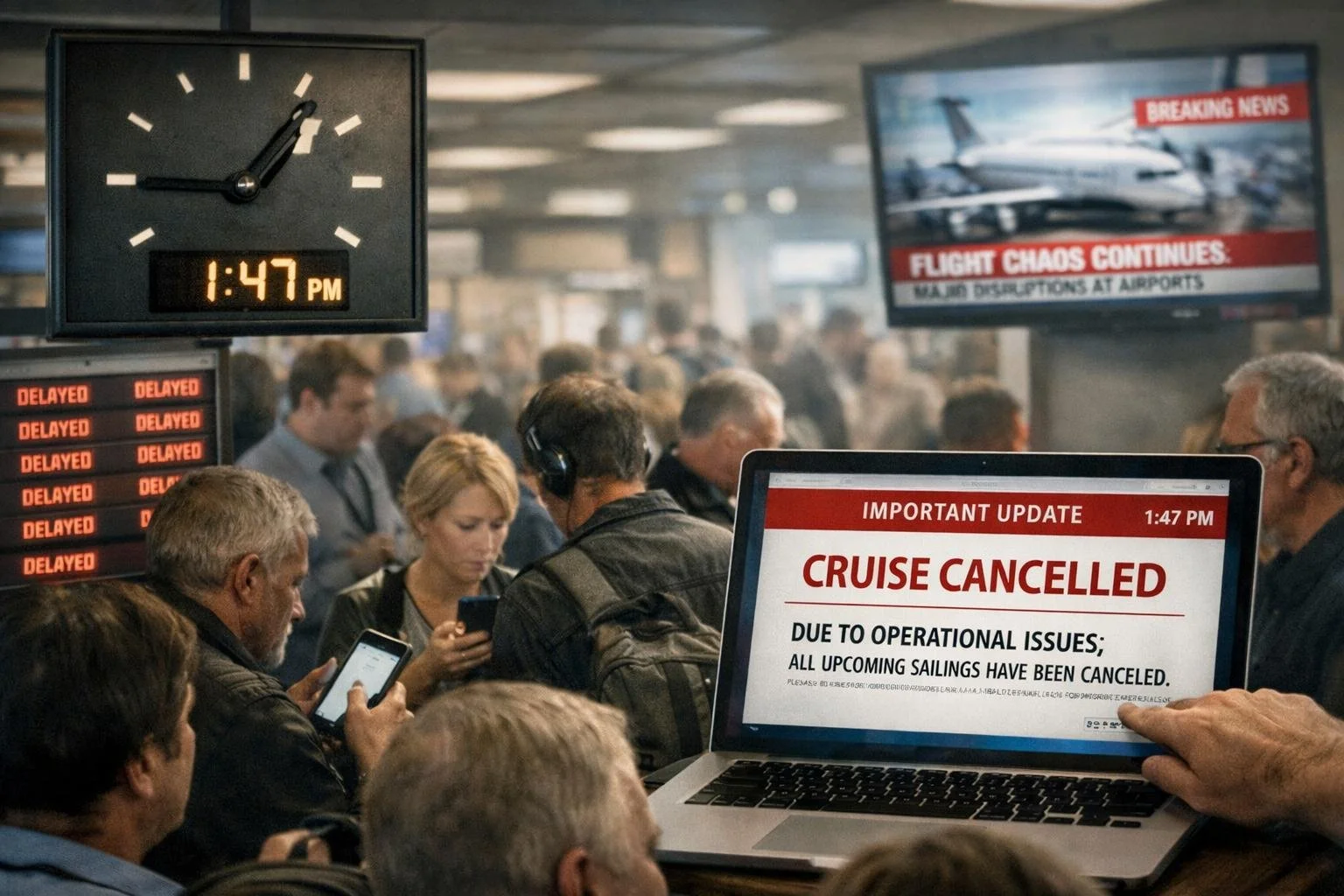
Then, at approximately 1:47 p.m., a notice finally appeared on the cruise line’s website.
The update stated that the ship would remain in port for an additional two days.
What it didn’t say was just as important:
• It did not suggest guests should plan to arrive late
• It did not offer guidance on revised embarkation
• It did not provide a live contact
• The only recommendation was to contact the insurer (AON)
At that point, we were dealing with two completely separate entities operating independently — the cruise line and the insurance provider — neither coordinating with the airlines.
And then there was the airline layer.
Airlines: Noncommittal, Fragmented, and Changing
By mid-day, airline information was inconsistent and evolving:
• Delta (original carrier from JFK)
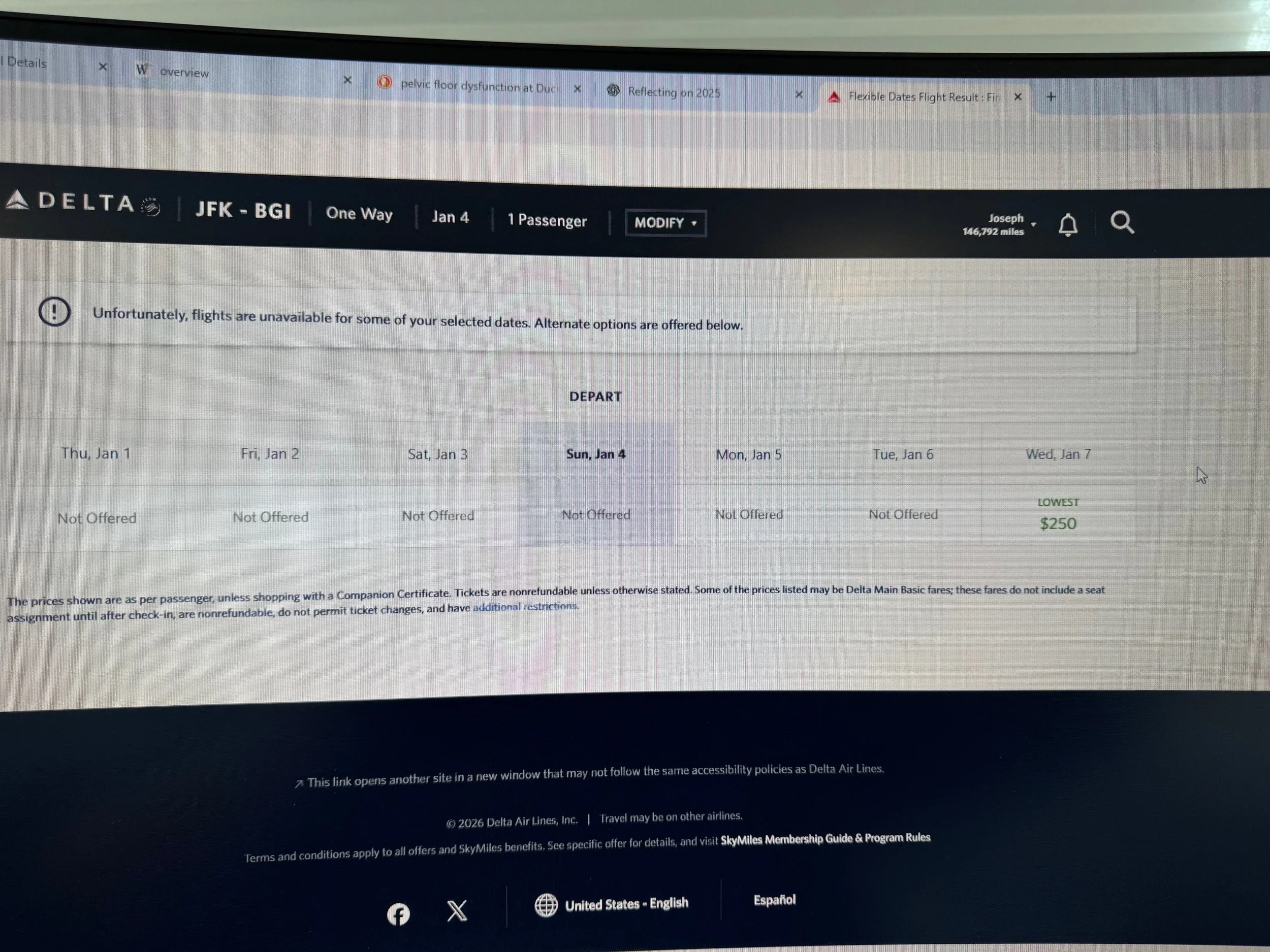
• Service not expected to resume until at least Tuesday
• Flights routed only through Atlanta on select days
• United (daily service)
• Airport screens showed no flights Sunday, Monday, or Tuesday
• No reliable rebooking options presented
• Miami as an alternate gateway
• Flights eventually appeared late Sunday afternoon
• Fares exceeded $1,300 per person one way, making them impractical
• Cost approached the price of the cruise itself
The natural next question arose:
Would insurance cover a last-minute reroute at that cost?
Insurance Reality: Cruise vs. Air
Here’s where a critical detail mattered.
The guest had purchased cruise insurance only, not air insurance.
• The cruise policy applied strictly to the cruise components
• There was no insurance coverage for airfare
• The airline, having canceled the flights, refunded the tickets — and exited the situation entirely
From the airline’s perspective, the issue was resolved.
From the traveler’s perspective, the trip was collapsing.
The Decision Point
As the day wore on, availability began to reappear — but too late.
By the time flights started populating again late Sunday afternoon, the client had already made the decision not to travel at all. The uncertainty, the lack of guidance, the escalating costs, and the absence of a clear path forward made the decision unavoidable.
She formally advised the cruise line that she was canceling completely.
At that point, the central question became:
Will the cruise line honor the cancellation, given that the cruise ultimately sailed?
Because the guest purchased the highest-level insurance offered, we are confident this will not present an issue — but that determination rests with the insurer after full documentation.
Late Sunday: The Irony
Ironically, by late Sunday afternoon:
• United’s nonstop to Barbados operated with approximately 23 empty seats
• Delta reinstated JFK–Atlanta–Barbados service
• Miami connections became available Sunday night, Monday, and Tuesday — though still cost-prohibitive
But the decision had already been made. Delta tickets were canceled. The guest was no longer traveling.
This is the uncomfortable truth of disruption:
availability returning does not undo the damage caused by silence earlier in the day.
Why Documentation Matters
The guest contacted AON (policy cost: over $400). The response was vague, as expected at this stage.
This is where the agent’s role becomes critical.
A formal letter will be prepared documenting:
• Flight cancellations
• Lack of timely airline options
• Absence of cruise line guidance
• Inability to reach the destination in time
• The reasonable decision not to travel
As mentioned in Part One:
Screenshots matter.
Time-stamped airline screens, notices, emails, and alerts create a chronological record that tells the real story — not the sanitized version that systems reconstruct later.
Send them to yourself. Save them. You will need them.
What Comes Next
This story isn’t finished.
Part Three will depend on:
• The cruise line’s formal response
• The insurer’s determination
• How responsibility is ultimately assigned
For now, Part Two stands as a real-time example of how travel disruptions actually unfold — not in neat steps, but in overlapping systems, delayed information, and human decisions made without a safety net.
You can read Part One here:
👉 https://lnkd.in/e7wdFUwF
More to come. Part 3
www.summitmgt.com
#HistoryIsWrittenInRealTime
#HistoryIsReWrittenInRealTime
#JoeKnows
#IncentiveTravel
#Travel
#WhatIf
When a Trip Unravels Overnight: Who Does What, and What Actually Happens Next
A real-time case study
I didn’t realize what was happening at first.
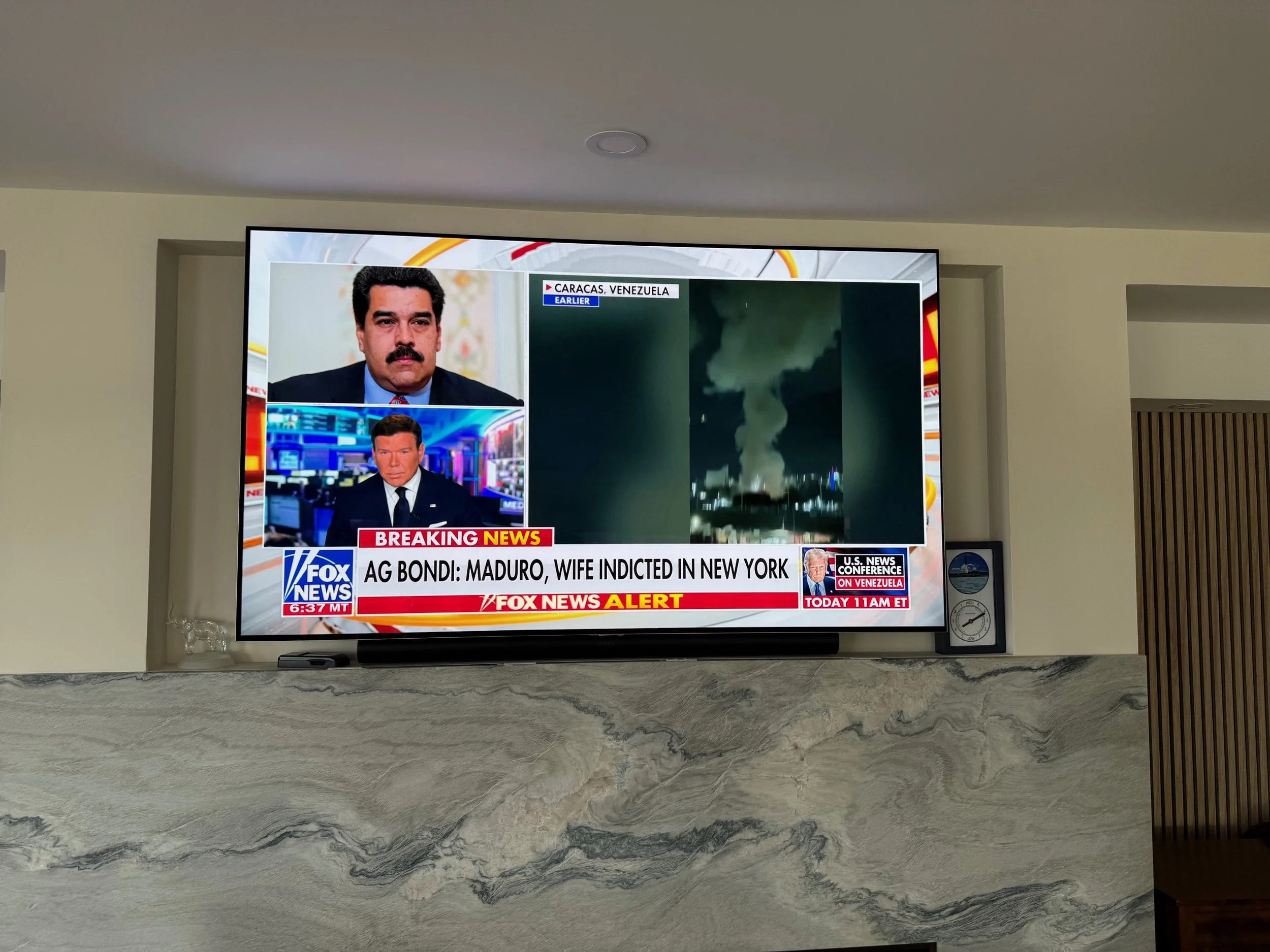
Ten minutes before I turned on the television and saw breaking coverage out of Venezuela—images of unrest and the capture of President Nicolás Maduro and his wife—I received a text from my client, Kimberly.
She said something felt off.
Flights. Alerts. Confusion.
It didn’t immediately connect.
When I called her, it clicked. Her Windstar cruise was scheduled to depart the next day. Barbados was the embarkation point of the itinerary. This wasn’t a weather delay or a mechanical issue.
This was a geopolitical event unfolding in real time.
And it was a reminder that travel doesn’t unravel politely—or on schedule.
Almost immediately, the same questions everyone asks started piling up:
Should we still go to the airport?
Should we try to get to the embarkation city anyway?
Will the ship wait?
Will the cruise be canceled?
And the hardest part—no answers yet.
When geopolitical events ripple through a region, cruise lines and airlines don’t always have immediate guidance. Call centers get overwhelmed. Systems lag. Travelers are left standing in airports or at home, trying to make real decisions without information.
So the question became the same one every traveler asks in moments like this:
“What do we do now?”
Let’s break it down—piece by piece.
Before Anything Else: One Critical Rule
Document everything.
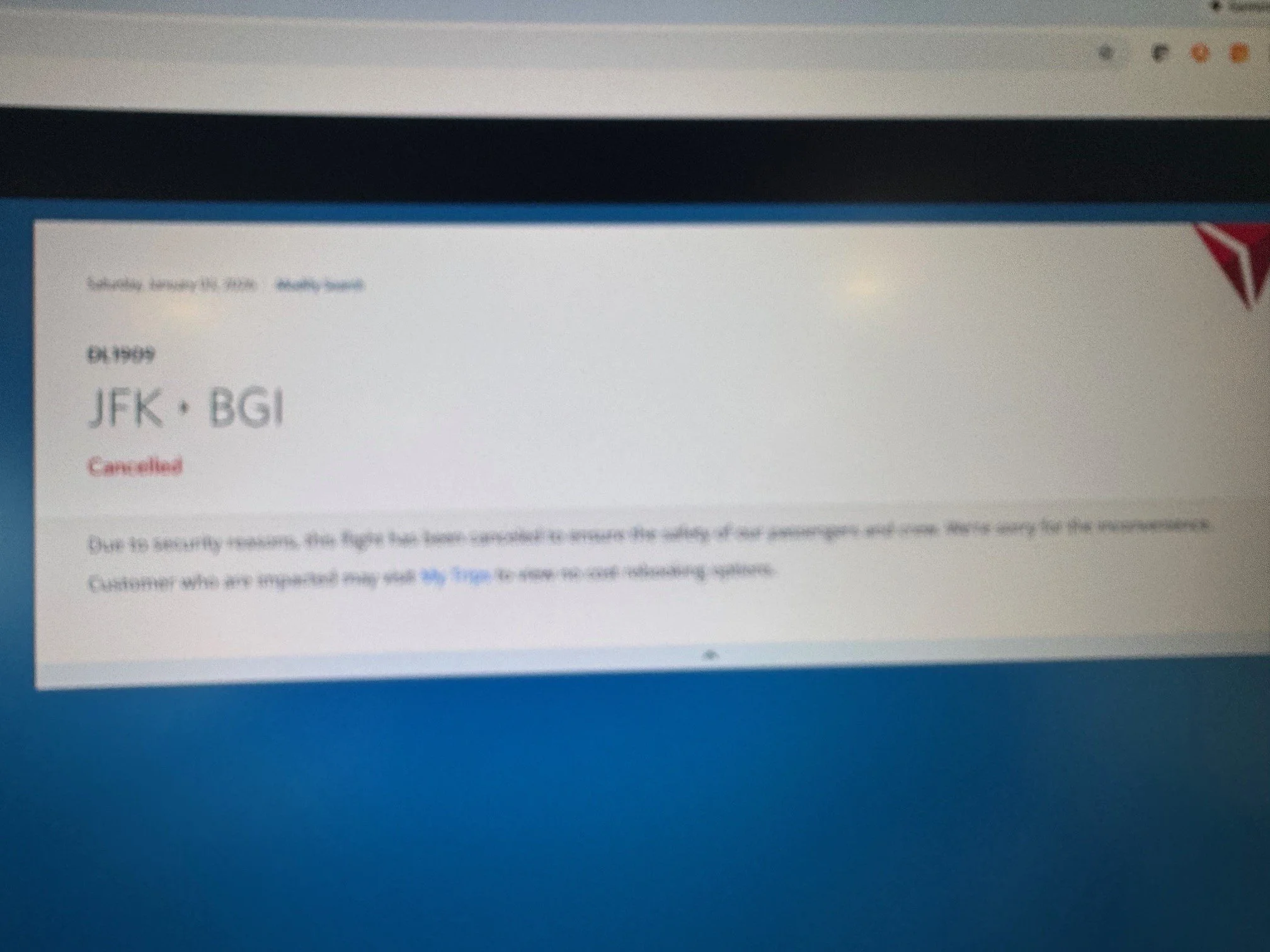
Always take screenshots of flight and cruise status updates as the day unfolds.
Airlines and cruise lines sometimes change the stated reason for delays or cancellations. A flight may initially show:
waiting for crew
mechanical
…and later be reclassified as:
weather
air traffic control
U.S. government restrictions or sanctions
The original cause often determines refunds, insurance coverage, and consumer protections. Once the reason changes in the system, earlier explanations can disappear. Screenshots preserve the timeline and the facts.
That matters later.
Step 1: The Airline
This was the cleanest part of the process.
Kimberly’s flight was canceled by the airline. Because the cancellation was initiated by the carrier—not the passenger—the airline automatically refunded the ticket to her credit card.
No debate.
No forms.
No waiting.
This distinction is critical:
Airline-initiated cancellation = refund
Passenger-initiated cancellation = rules, fees, credits
In situations like this, it’s often best to take the refund, keep the transaction clean, and reassess later. You can always rebook. Since her airfare wasn’t insured anyway, this made the most sense.
One piece resolved.
Step 2: The Cruise Line (Windstar)
This is where the situation becomes far less predictable—and where the information gap becomes the real problem.
Before refunds, credits, or insurance even come into play, cruise lines must decide something fundamental:
If the ship itself is not in danger in the port it is currently in, and if passengers cannot reach the embarkation port in Barbados because flights across the Caribbean may take a day or two to stabilize, what happens next?
More specifically:
Does the cruise line keep the ship in port?
Are passengers already on board allowed to remain onboard?
Are arriving passengers permitted to embark once flights resume?
Does the ship simply depart one or two days late rather than cancel the sailing?
Or—
Does the cruise line cancel the cruise outright?
From the outside, a delayed departure may seem logical. In practice, this decision is governed by far more than operational convenience.
Cruise lines must weigh:
Port authority permissions
Insurance and underwriting requirements
Crew duty-time regulations
Fueling and provisioning contracts
Downline itinerary impacts and future sailings
Compliance with U.S. government restrictions or sanctions
Even when the ship itself is safe, legal, regulatory, and insurance constraints often override what might otherwise appear to be a reasonable delay-and-depart solution.
The Information Vacuum
At this stage, the cruise line is often overwhelmed and unable to provide immediate guidance. This is precisely when a real-time travel advisory should be automatically posted—a single, timestamped place for passengers to go for clear instructions on what they should and should not do.
Instead, travelers are left with the same unanswered questions:
Should we still try to make our way to the embarkation city?
Should we stay home?
Will the cruise be canceled, delayed, or rerouted?
These are not unreasonable questions. They are the basic questions everyone has while walking through an airport, sitting at a gate, or deciding whether to leave for the airport at all.
In this case, my client placed her first call to the cruise line more than four hours earlier, before the office was even open. I placed my own call more than two hours ago using the cruise line’s callback feature—and as of this writing, there has been no response.
So everyone is effectively standing around—waiting, guessing, trying to make decisions without information.
And that uncertainty matters.
Because if the ship ultimately departs a day or two later, there is a real possibility that passengers could fly the next day or the day after and still join the cruise as individual travelers in Barbados. But without knowing whether that option even exists, no one can responsibly decide what to do.
Kimberly had cruise insurance through Windstar, which is important. This disruption was not caused by the traveler, but by extraordinary external events—political unrest and regional safety concerns. In insurance terms, this typically falls under:
force majeure
acts beyond the traveler’s control
government-action disruptions
Once communication resumes, the immediate next steps are straightforward:
Confirm whether the sailing is officially canceled, altered, or suspended
Determine what Windstar is offering:
a full refund
future cruise credit
rebooking options
The question everyone ultimately asks
What happens to the cruise insurance premium?
In most cases:
If the cruise is canceled outright by the cruise line, the insurance may become moot
If the cruise is rescheduled or rebooked, insurance does not automatically transfer
Some insurers may apply the premium to a future booking; many will not
This is where documentation, timing, and judgment matter—and where having an experienced advisor matters even more.
An Important Clarification: Sanctions Don’t Need to Be on the Itinerary to Matter
Even if a cruise does not include Venezuela as a port of call, U.S. government restrictions or sanctions can still affect Caribbean itineraries.
When sanctions are issued or expanded, cruise lines must reassess legal compliance, insurance, fueling, provisioning, port permissions, and crew movement across the region.
As a result, cruises can be delayed, rerouted, or canceled even when the sanctioned country is not listed on the itinerary.
This is not discretionary. It is legal compliance.
Step 3: The Hotel (Booked Independently)
This is where things become murkier.
Kimberly booked her pre-cruise hotel independently because she found a better rate. That’s common—and often smart—but it does change the risk profile.
The hotel’s cancellation deadline had passed. She couldn’t travel, but technically, the hotel hadn’t done anything wrong.
What she did right:
Immediately emailed the hotel
Included her confirmation number
Explained the situation clearly and professionally
At this point, the outcome depends entirely on hotel discretion. Some refund. Some offer a credit. Some say no.
This is exactly where third-party travel insurance that covers hotels can make a meaningful difference.
Step 4: Ground Transportation (Uber)
Interestingly, Uber handled this perfectly.
Kimberly had scheduled an early-morning Uber to the airport. When the flight was canceled, Uber’s system notified her. She canceled within minutes and was not charged.
A small detail—but one less fire to put out.
Step 5: The Bigger Question — What Should Happen?
This cancellation wasn’t caused by indecision, illness, paperwork, or missed connections.
It was caused by world events.
In a fair and reasonable travel ecosystem:
Airlines refund when they cancel
Cruise lines offer refunds or penalty-free rebooking
Cruise insurance covers the event—or becomes unnecessary if the cruise is canceled outright
Hotels show flexibility when events are truly extraordinary
Insurance premiums are reviewed case by case, not automatically forfeited
Why I’m Documenting This in Real Time
I’m sharing this as it unfolds—not to complain, but to educate.
Because this is what travel actually looks like:
Not just brochures and bucket lists
But logistics, contracts, insurance, timing, and judgment calls
And sometimes, knowing what not to do next
I’ll continue to share updates as we see how the cruise line and insurers respond.
Watch for Part 2 once the cruise line responds and we see how this is ultimately handled.
History isn’t written after the fact.
History is written in real time.
#HistoryIsWrittenInRealTime
#HistoryIsReWrittenInRealTime
#JoeKnows
Seeing New York City Again - Through My Grandchildren’s Eyes
The first thing we noticed wasn’t New York City at all.
The New Jersey Turnpike was a mess — heavy traffic, exactly what you’d expect. But as we got closer to Route 495 heading toward the Lincoln Tunnel, it was strange. The traffic just disappeared. It honestly felt like there wasn’t a car on the road. My first thought was, Is this congestion pricing actually working? And if it is… wow.
Then we hit the spot where you usually get your first look at the city. Or at least, you’re supposed to. This time there was nothing. Just fog. Gray sky. No skyline at all. For a second it felt like, Well, that’s disappointing.
And then we went through the tunnel.
About halfway under the Hudson, we slowed for a moment right at the state line — half the car still in New Jersey, the other half already in New York. When we came out on the other side, everything opened up. The fog lifted just enough and suddenly there it was. The size of it. The scale of it. That’s when the “oh wow” started.
My grandchildren are from Fort Collins, Colorado. They’d never seen anything like this. The buildings just kept getting taller. Every few blocks it was, “Oh my gosh,” or “Did you see that?” To them, it wasn’t crowded or hectic — it was just huge.
I’ve spent a lifetime moving people through cities — work that’s touched more than 134,000 users worldwide — but seeing New York through their eyes was completely different. No schedules. No urgency. Just wonder.
Once we were in the city, it felt different than I remembered. Fewer cars. More room for bikes and electric vehicles. Years ago, that kind of setup would have been chaos. This time, it worked. You could really feel the difference.
At one point, I caught myself explaining the tolls to the adults in the car. The kids didn’t care at all.
Basically, on a weekday it broke down like this:
About $15 for the Lincoln Tunnel with E-ZPass
About $9 for congestion pricing
Roughly $24 total
Split across a full car, it made sense — especially considering what we didn’t deal with. No gridlock. No endless circling for parking.
And parking was the biggest surprise of all.
Midtown actually had space. Real space. Parking garages competing with each other. Early-bird, all-day parking for under $25. I spent years commuting into the city, and I never saw that.
We drove around easily. Pulled over near Rockefeller Center without double-parking. On the Upper West Side around Columbus and 73rd, we grabbed a bite without stress. We passed the horse-drawn carriages — and right next to them were electric versions quietly moving along. Old New York, adapting.
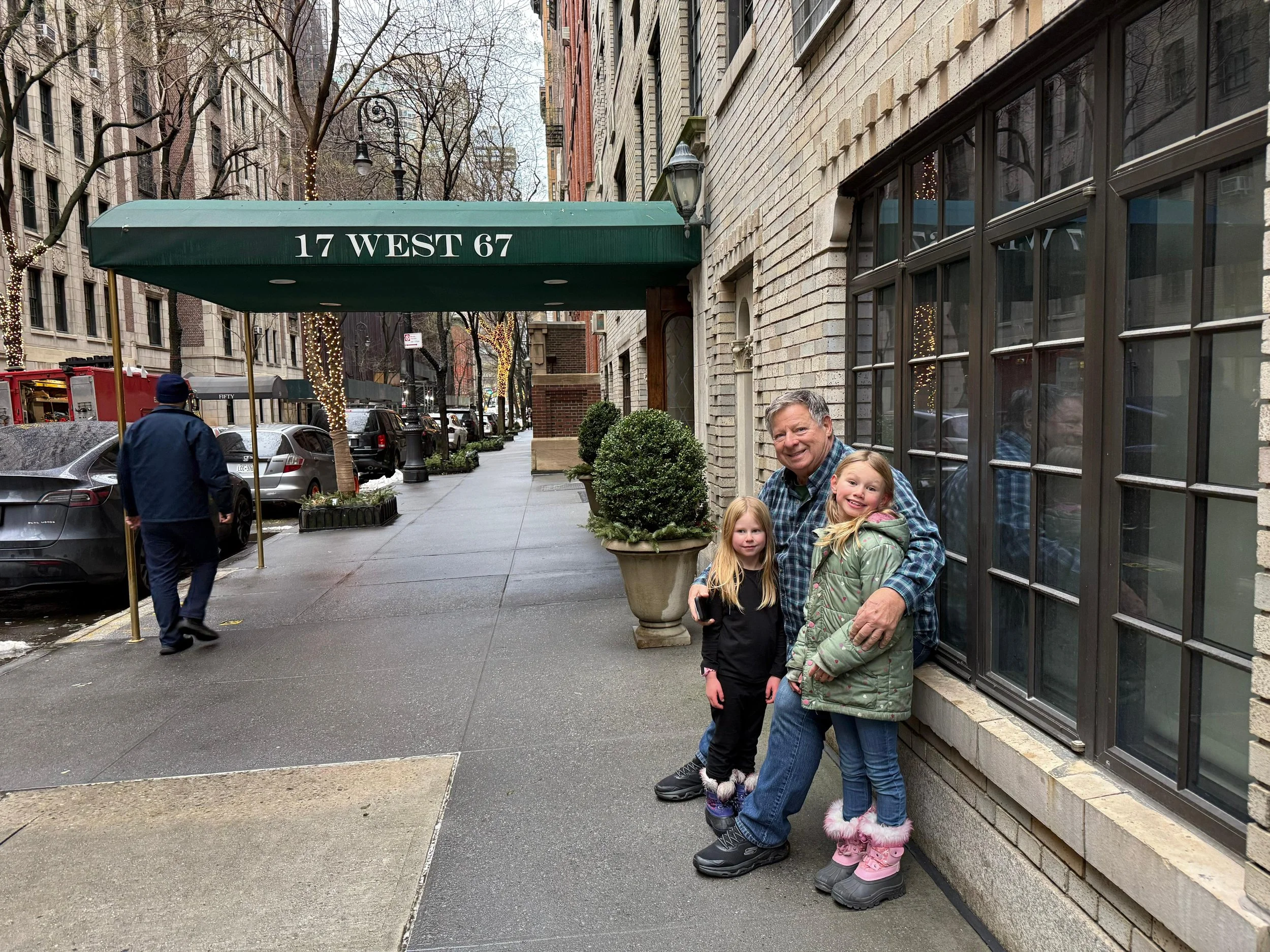
We ended the day on West 67th Street, right in front of the Café des Artistes building, across from where ABC News used to be and near where Tavern on the Green once was. That building mattered to me. Apartment 9F at 17 west 67th street was my first place in New York City.
From there, we walked into Central Park.
It was gray out. Nothing postcard-perfect. But it was still a really good day.
What made it special wasn’t tolls or policy or traffic patterns. It was seeing New York again through my grandchildren’s eyes — how big it felt to them, how new everything was.
After years of rushing in and out for work, the city felt different. Slower. Curious again.
And for the first time in a long time, NYC felt a little magical.
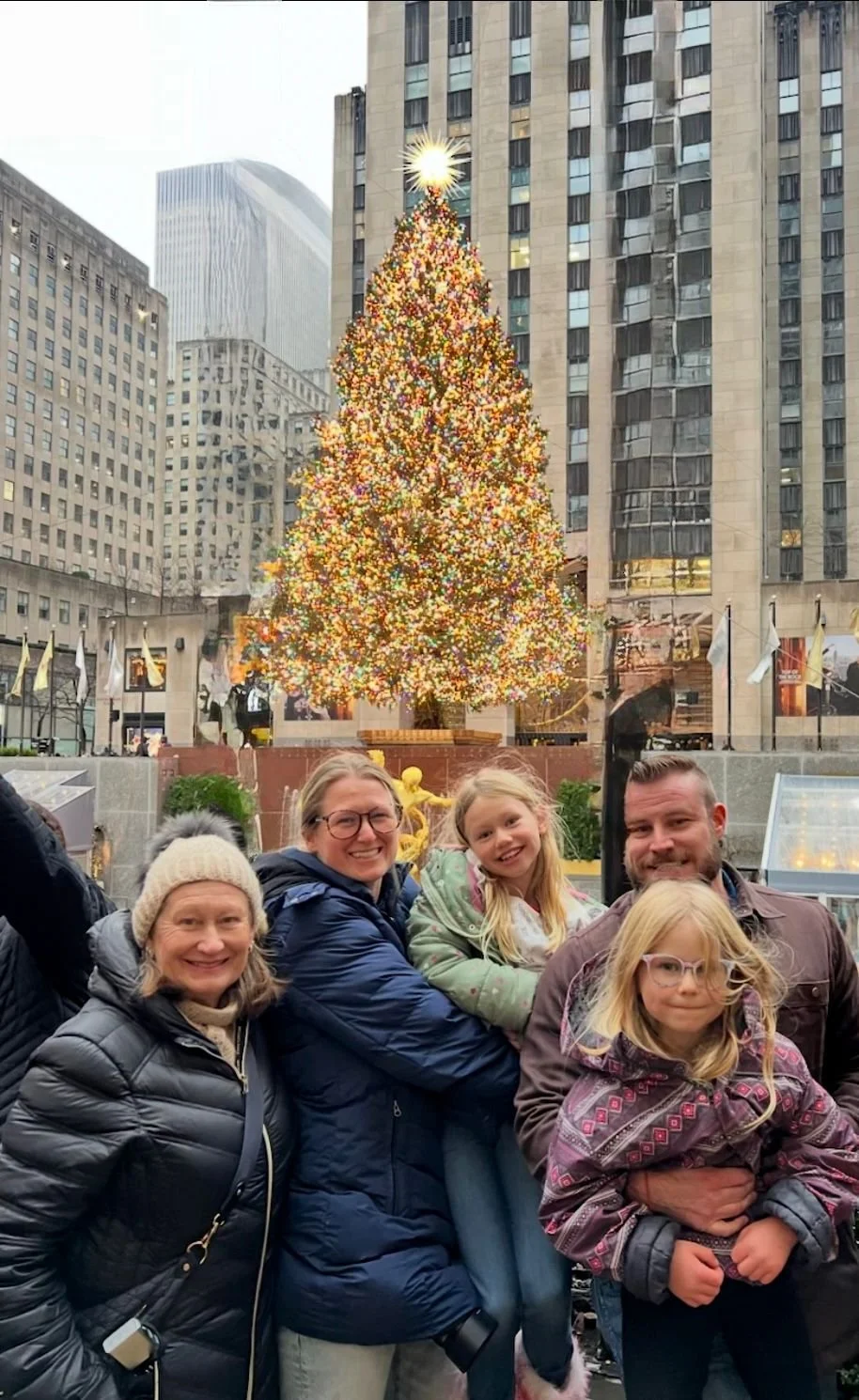
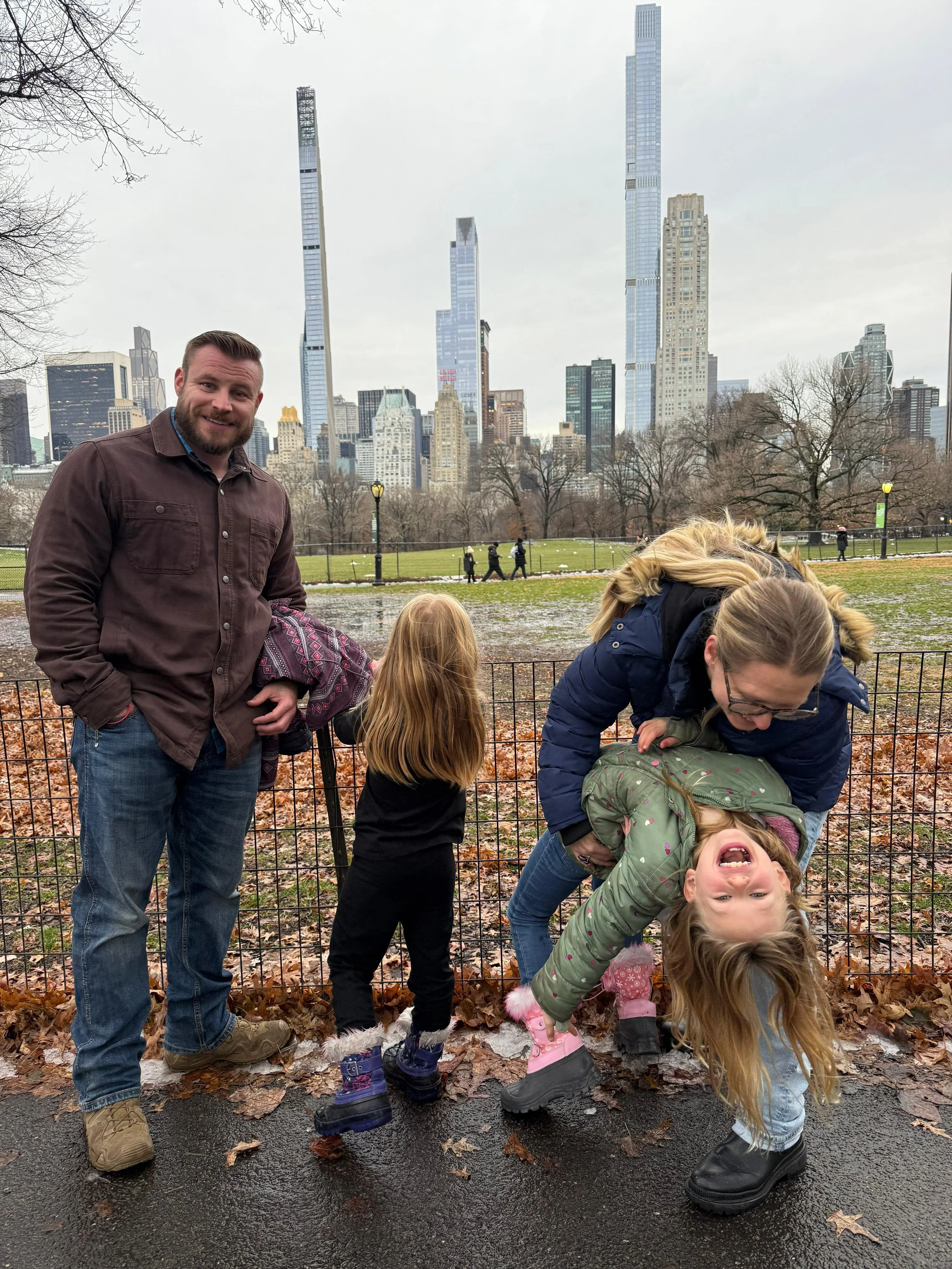

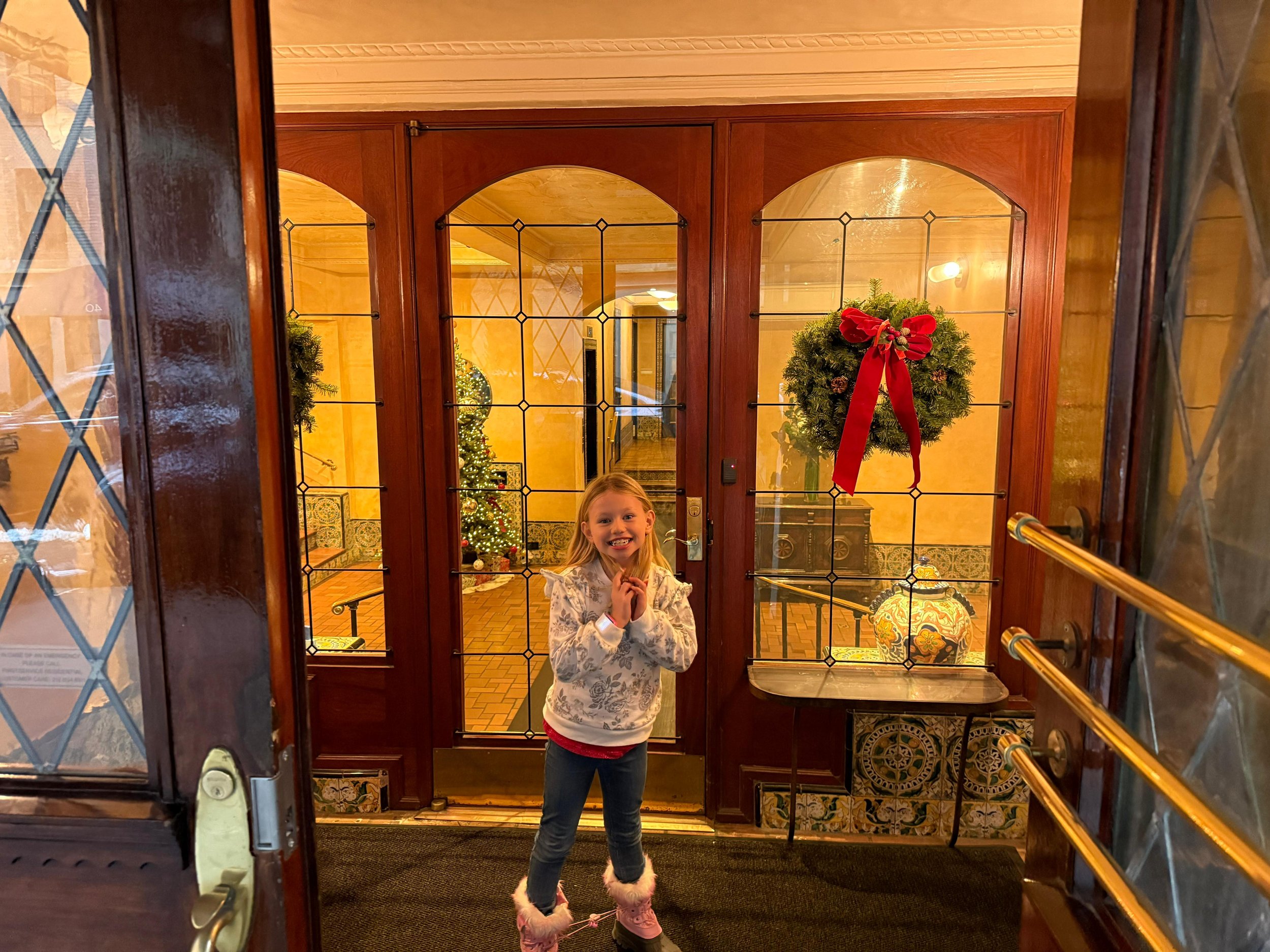

#JoeKnows #Tavel
A Hidden Perk at Punta Cana Airport: The Priority Lounge with a Pool
Most travelers pass through airports expecting the usual: a crowded gate area, a long line for coffee, and nowhere comfortable to sit. But Punta Cana International Airport offers something different — something most people don’t even know exists.
As a guest of the Priority Lounge, you have access to a full swimming pool set just steps above the main lounge. You can sit outside, relax before your flight, grab a chair by the pool, or cool off while you wait to board. Inside, the lounge serves a solid buffet with plenty of choices and comfortable seating.
For anyone flying United Airlines, the location is even better. The United gates are just a short walk from the entrance to the lounge. No running across terminals, no rushing — you can enjoy the pool until you’re ready to head to your gate.
How to Get In
You may already have access through a credit card sitting in your wallet. Several major cards include a free Priority Pass membership, which covers admission to lounges like this one.
Here are the cards that provide complimentary Priority Pass access:
Top-Tier Cards
Chase Sapphire Reserve®
The Platinum Card® from American Express
Capital One Venture X Rewards Credit Card
Citi Prestige® (for existing cardholders)
Business Cards
The Business Platinum Card® from American Express
Capital One Venture X Business
Additional Cards Offering Priority Pass
U.S. Bank Altitude Reserve Visa Infinite®
Ritz-Carlton Visa Infinite® (legacy)
HSBC Premier World Elite Mastercard® (selected markets)
Each card has its own guest rules, but cardholders themselves enter free once they enroll in Priority Pass.
Why It’s Worth It
If you’re heading home from Punta Cana — whether you’re there for vacation or part of a group program — taking an hour at the lounge pool is a great way to end the trip. It’s calm, it’s comfortable, and it’s one of the most convenient lounges in the Caribbean.
Travelers rarely expect an airport to offer anything more than the basics. Punta Cana’s Priority Lounge is one of the exceptions.
#JoeKnows #historyIsWrittenInRealTime #history #IncentiveTravel #NextNormalMeetings #SummitManagementServices #CedarGroveTravel #MeetingPlanning #GroupTravel #EventProfs #TravelIndustry #JoeLipman
Southwest Airlines’ New Customer-of-Size Policy
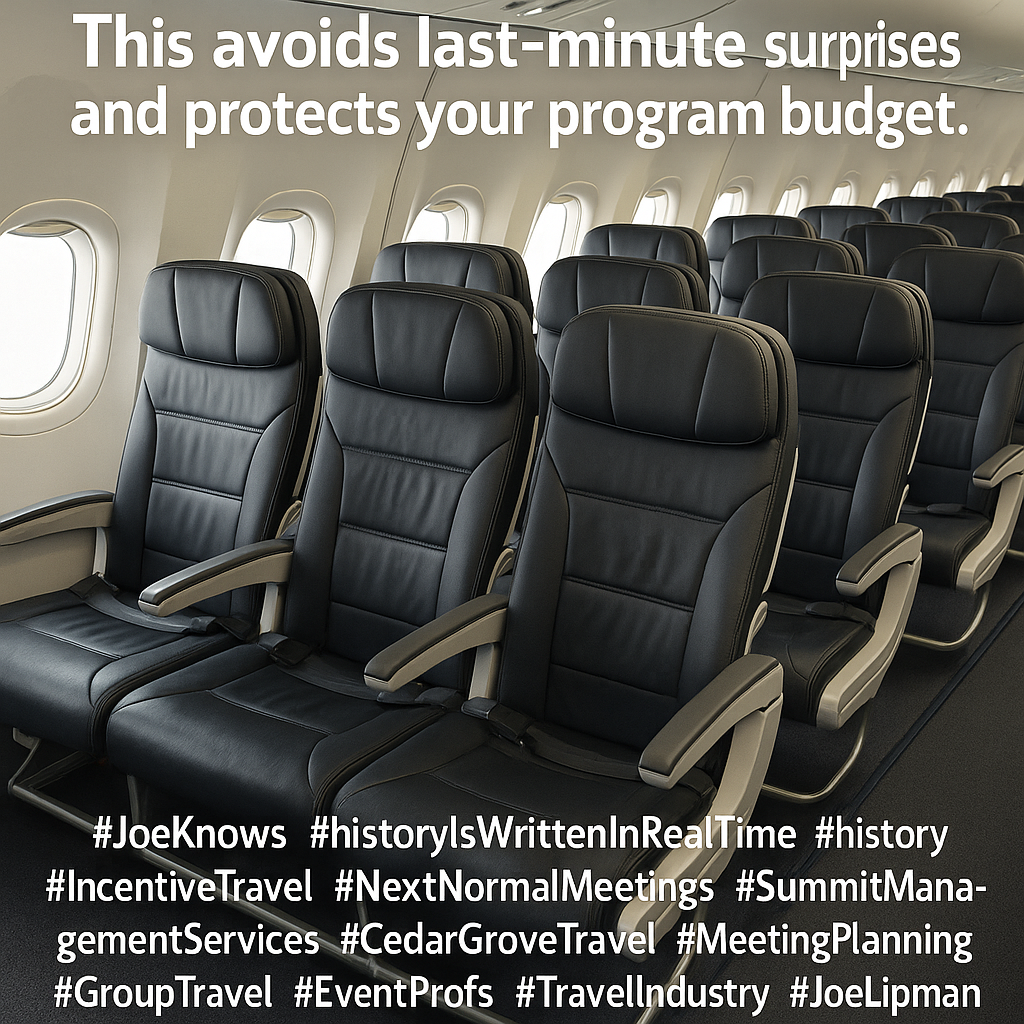
2 seats for larger guests
Southwest Airlines’ New Customer-of-Size Policy: What It Costs, How Refunds Work, and What Happens to Your Frequent-Traveler Benefits
Southwest Airlines is rolling out major changes on January 27, 2026, and two of them directly affect millions of travelers:
Assigned seating replaces open boarding, and
A revised Customer of Size policy takes effect, requiring certain passengers to buy an extra seat at booking.
Here’s what travelers, and especially corporate travel planners, need to know.
What the Second Seat Costs
Southwest will require customers who cannot fit comfortably within a single seat (armrests down) to purchase two seats at the time of booking.
Pricing rules:
• The second seat costs the same fare you paid for the first seat (Wanna Get Away, Anytime, or Business Select).
• Taxes and fees typically apply only to the primary seat, but the fare portion of the second seat must be paid in full.
• Both seats must be purchased under the same passenger name and fare class.
This extra space is no longer complimentary or handled at the gate. It must be booked in advance.
How to Get Your Money Back: The New Refund Steps
Southwest still allows refunds for the second seat, but the rules are stricter and the process is no longer automatic.
Both seats must be purchased under your name in the same reservation.
This ensures you are assigned two adjacent seats once assigned seating begins.The flight must NOT have been full.
Southwest will only issue a refund if the aircraft departed with at least one empty seat.Submit your refund request within 90 days of travel.
This is a major change. Refunds are no longer handled automatically at the gate.
You must:
• Visit Southwest.com
• Select the Customer of Size Refund Request
• Upload confirmation details
• Submit within 90 days of your completed travel
Requests made after 90 days will not be honored.
Refund is issued to the original form of payment.
Once approved, Southwest credits the fare of the second seat back to your card.
Do You Earn Rapid Rewards or Elite Status Credit on Both Tickets?
This is where things get nuanced.
What’s clear:
• Your primary seat earns Rapid Rewards points and elite-status credit just like any other paid Southwest ticket.
What is not guaranteed:
• The second seat does not automatically earn Rapid Rewards points, elite-qualifying flights, tier credits, or Companion Pass credits.
• Southwest has not published any statement confirming that the second seat is treated as a qualifying flight.
• Historically, airlines classify extra seats (for size, instruments, or workspace) as non-qualifying for loyalty earning.
Best assumption for now:
Only the first seat earns points and status credit.
The second seat is an accommodation, not a second qualifying flight.
This is important for frequent travelers and corporate travel planning. Customers should not expect double points, double qualifying flights, or double Companion Pass credit.
Why Southwest Made the Change
With assigned seating replacing open boarding, Southwest needs accurate seat counts in advance. Requiring eligible customers to book two seats upfront:
• eliminates last-minute disputes,
• prevents gate delays,
• allows fairer seating assignments, and
• improves the boarding process.
This is part of Southwest’s broader modernization effort.
For Corporate Travel Managers and Event Planners
If you manage group travel or incentive programs:
• Make sure travelers who need additional space book two seats upfront.
• Document the purchase so refunds are easy to request later.
• Explain that Rapid Rewards benefits apply only to the primary seat, not both.
This avoids last-minute surprises and protects your program budget.
#JoeKnows #historyIsWrittenInRealTime #history #IncentiveTravel #NextNormalMeetings #SummitManagementServices #CedarGroveTravel #MeetingPlanning #GroupTravel #EventProfs #TravelIndustry #JoeLipman
Moon Palace Punta Cana

The New Benchmark for Large Meetings & Incentive Programs in the Dominican Republic
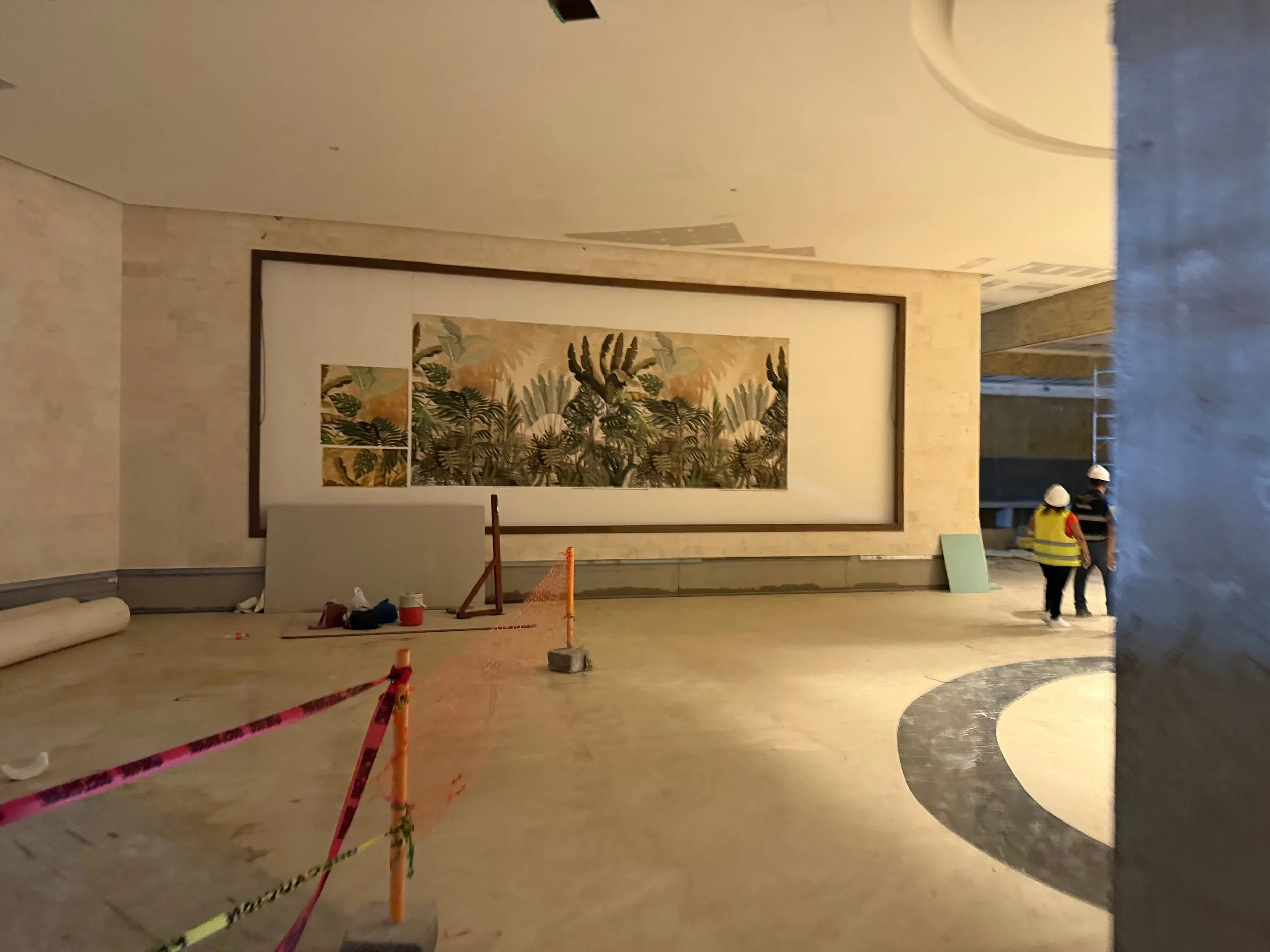
Last Friday, I had the opportunity to conduct a full hardhat tour of the new Moon Palace Punta Cana with the General Manager who will be leading the property when it opens this April. This wasn’t a routine walk-through. It was a deep inspection of a massive construction project operating at a scale rarely seen in the Caribbean.
What stands out first is the workforce. At peak load, 5,000 workers are on-site at any given time, and that number rises to nearly 7,000 workers per day during major construction phases. Supporting that volume requires a logistical system all its own: more than 5,000 mini-bikes are staged about a mile outside the property. Staff park there each morning and are transported by shuttle in a continuous flow to the construction zone. Seeing that operation firsthand — thousands of bikes in perfect rows, buses moving in and out, and two full daily shifts — instantly communicates the seriousness, ambition, and magnitude of this resort.
Moon Palace Punta Cana isn’t just big. It’s engineered for volume, movement, and large-scale event capability.
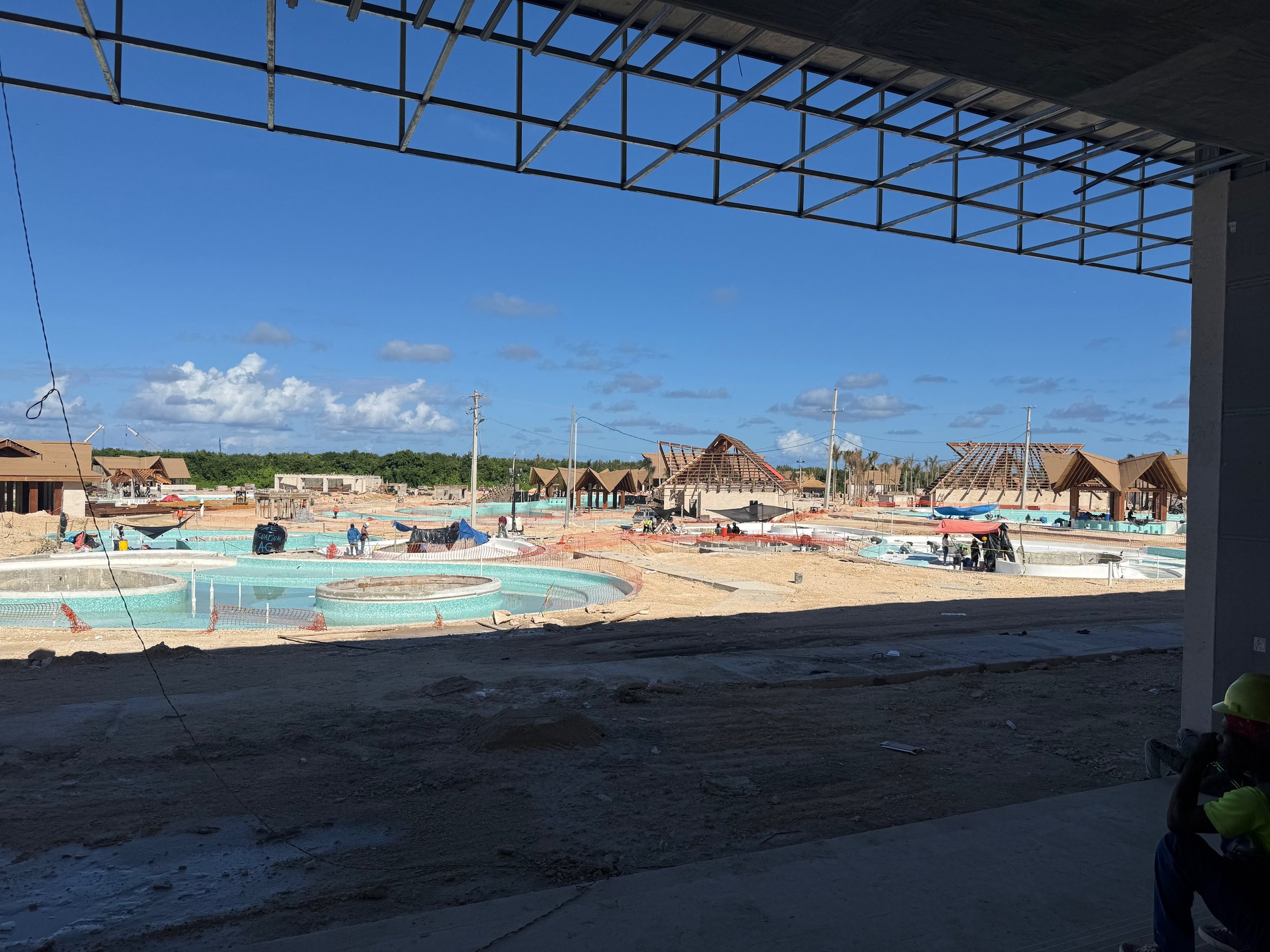
A 2,100-Room Resort Designed for Mega-Groups
With 2,100 rooms, the property will immediately become one of the most important group destinations in the Caribbean. For planners managing incentive houses, global meetings, or large corporate programs:
• You can house your entire group under one roof.
• No multi-hotel shuttling or spillover properties.
• Multiple simultaneous programs can run without competing for space.
• VIP, executive, staff, and tiered qualifiers can all be accommodated in clearly defined room blocks.
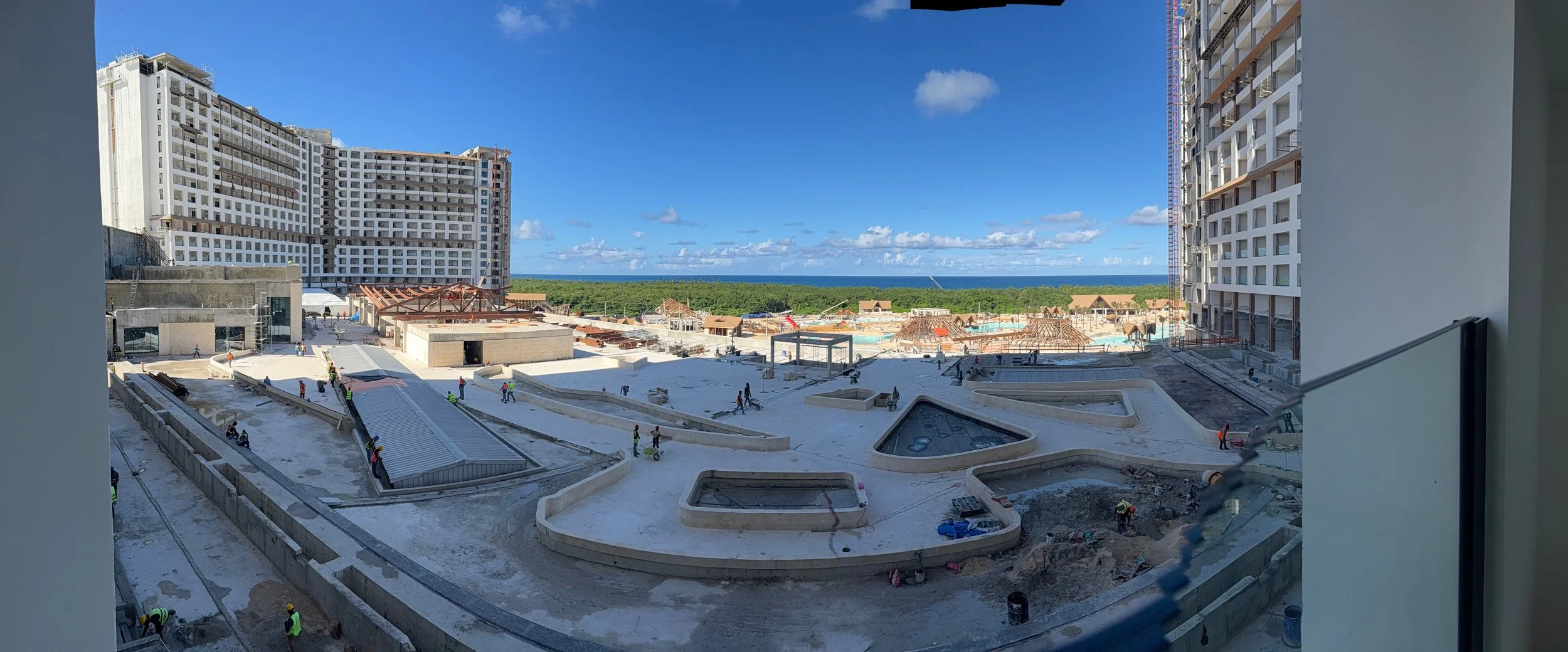
The size alone places this property in a category few resorts can match
19 Restaurants, 9 Pools & More Than 100 Swim-Up Suites
Scale matters — but variety matters just as much.
Moon Palace Punta Cana will open with:
• 19 restaurants spanning global cuisines
• 9 pools, including multi-zone decks ideal for activations
• 100+ swim-up suites, a huge advantage for premium qualifiers and VIPs
For planners, this offers flexibility in programming: dine-arounds, themed evenings, tiered recognition experiences, and multiple private areas for smaller group events.
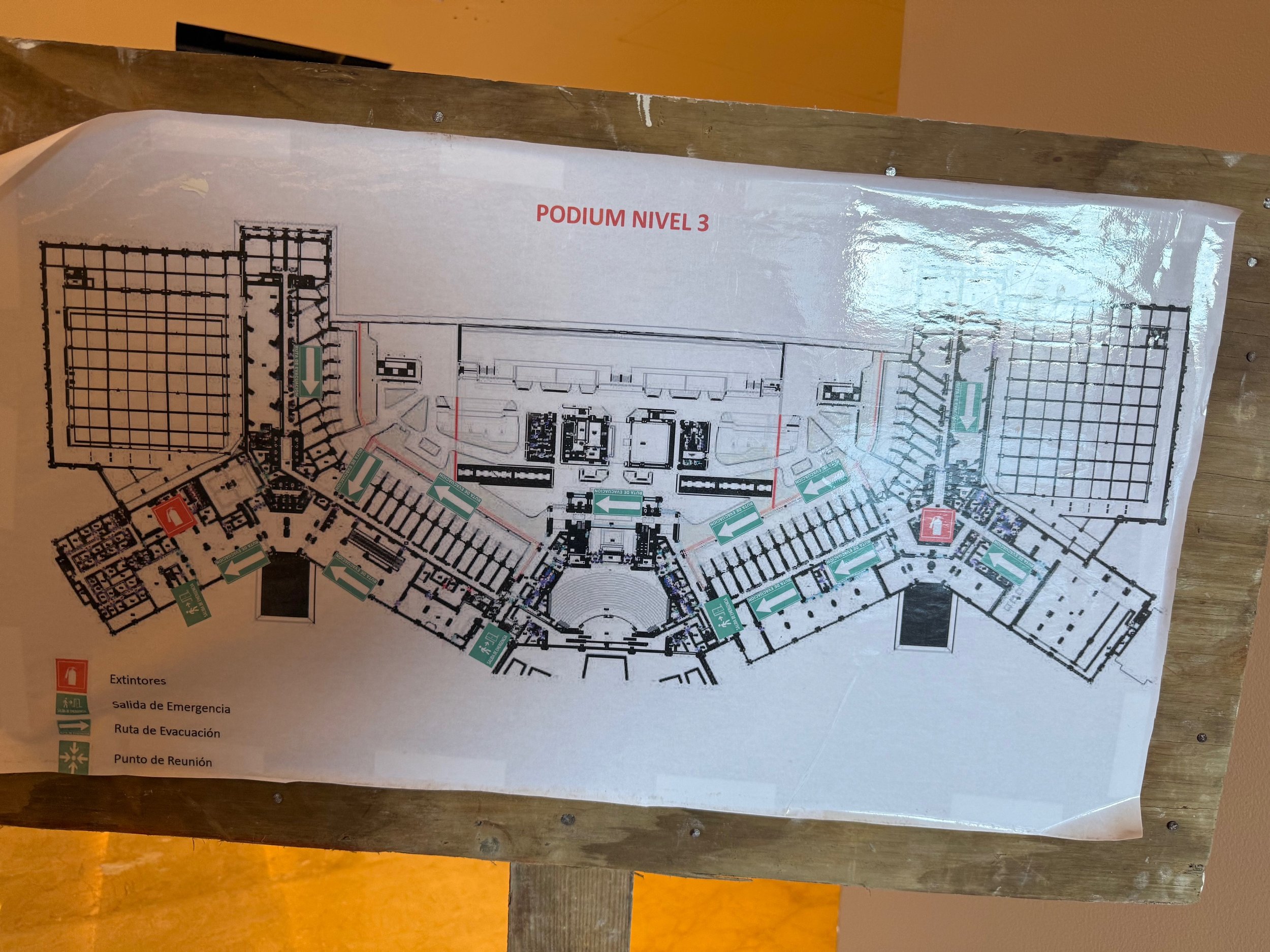
A Podium Built for Group Flow and High-Capacity Circulation
The Podium Level 3 map tells planners everything they need to know.
Wide corridors, central vertical access points, open pre-function areas, and multi-wing connectivity allow:
• Fast transitions between general sessions and breakouts
• Large-volume arrivals without bottlenecks
• Multi-track scheduling across separate venues
• Brand activations and sponsor displays without restricting movement

The resort’s layout isn’t merely large.
It’s intentional — designed for groups.
Arrival Experience: Group Efficiency Without Sacrificing Impact
One of the strongest features for planners is the arrival design.
The massive porte-cochère and front-of-house arrival zone support:
• Dedicated group check-in areas
• Multiple coaches unloading at once
• Separate flow for VIP and executive arrivals
• High-volume luggage handling
• Rapid processing of large wave arrivals
Crucially, group arrivals will still enjoy a beautiful, architectural main entrance.
There is no “back-door” or second-tier group experience.
Planners get efficiency and first-impression excellence.
Ballrooms, Theater & Meeting Space Built for Production
Although still under construction, the event spaces show clear intention:
Ballrooms
• Large general-session capacity
• Tall ceiling heights ideal for full production
• Wide load-in paths for AV and staging
• Divisible sections for multi-track agendas
• Oversized pre-function zones for registration, sponsor displays, or networking
Breakout Rooms
• Multiple breakout clusters
• Easy transitions from ballroom to meeting rooms
• Wide hallways to support movement at scale
Theater & Entertainment Venues
• Purpose-built performance and keynote spaces
• Multi-use staging environments
• Proper acoustical and structural planning for large indoor productions
Event planners will have the ability to stage large corporate shows, evening entertainment, awards dinners, and product launches with ample room to build and rehearse.
Operational Power: A Resort Built for Volume
With thousands of workers operating in shifts, and a highly organized infrastructure supporting the build, it’s clear this resort is being developed with:
• Strong back-of-house operations
• Scalable food-and-beverage support
• High staffing ratios
• A layout capable of handling peak arrivals and departures
This is critical for large programs, where consistency and reliability matter as much as beauty.
For Planners Considering a Large Program Here
For more information about reserving, designing, or managing a large incentive program of this scale at Moon Palace Punta Cana, contact:
#JoeKnows #Incentives #Meetings #EventProfs #CorporateEvents #GroupTravel #IncentiveTravel #PuntaCana #CaribbeanMeetings #SummitManagement
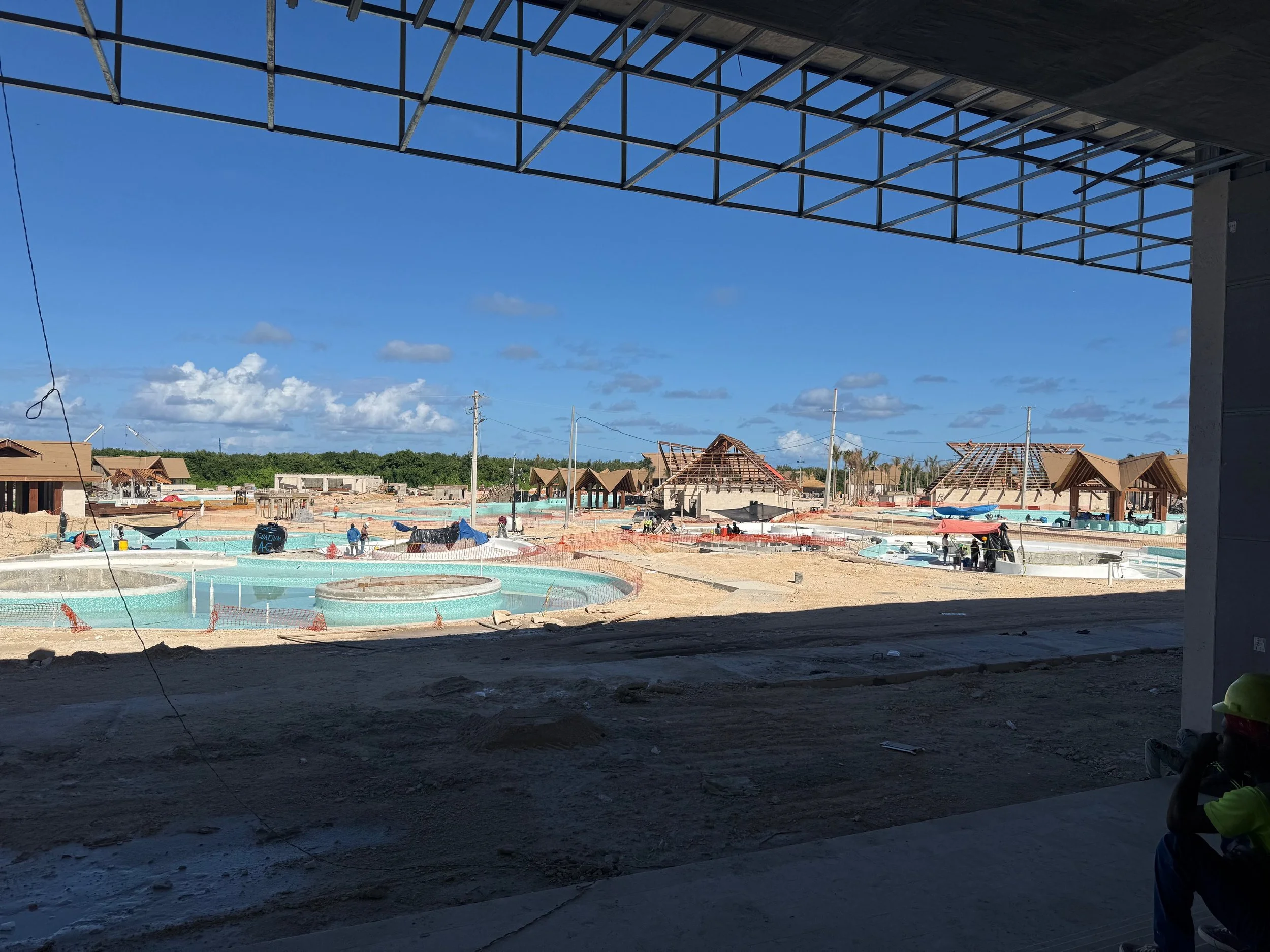
HistoryIsBeingREwrittenInRealTime
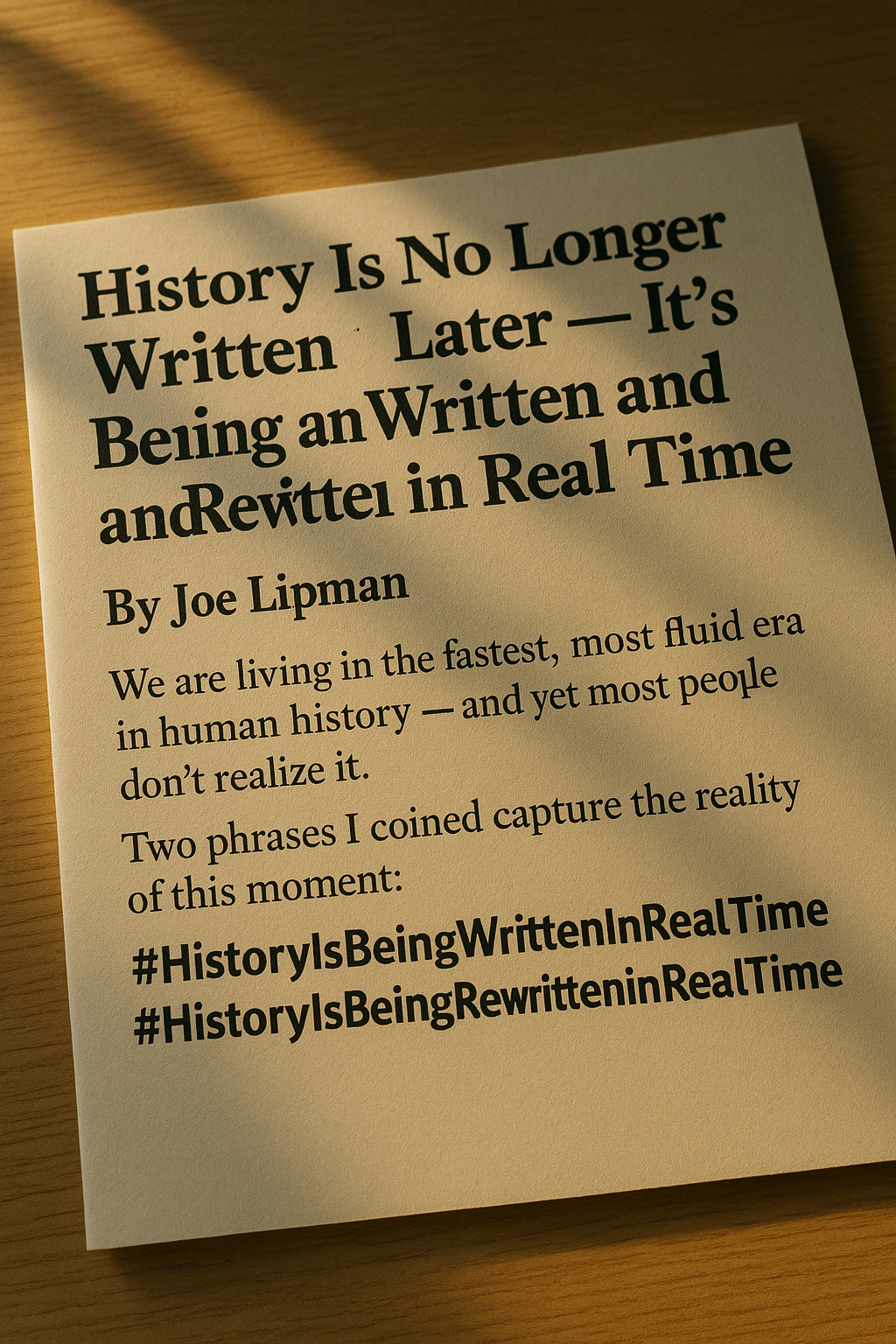
These aren’t slogans…
They are a structural shift in how truth, events, and public understanding evolve.
For centuries, history was something recorded long after events occurred.
Editors, scholars, investigators, and archivists debated what happened — and eventually reached a narrative.
That world no longer exists.
Today, history is shaped instantly through AI, media, digital platforms, and coordinated influence.
Events are reframed before the public even has time to digest the original facts.
Below is how this transformation plays out across six major sectors.
1. Travel & Service Industry
My own background — and one of the fastest-moving fields on Earth.
Written in Real Time:
Airlines reroute and recalibrate instantly.
Viral videos trigger overnight operational changes in hotels and cruise lines.
Rewritten in Real Time:
Tourism boards and hotels reshape global perception with digital storytelling.
A single negative post can permanently damage a brand.
2. Politics
Written in Real Time:
Real-time debate fact-checking shapes public opinion immediately.
Social movements influence legislation before lawmakers meet.
Rewritten in Real Time:
Headlines revise narratives within hours.
Selective releases influence public judgment before investigations conclude.
3. Economics
Written in Real Time:
Federal Reserve comments instantly shift markets.
Remote work reshapes entire industries.
Rewritten in Real Time:
Job losses renamed “strategic restructuring.”
Revised economic data alters whether a recession “actually” happened.
4. Healthcare
Written in Real Time:
Genetic sequencing identifies outbreaks in days.
Telemedicine becomes the default.
Rewritten in Real Time:
Mid-crisis guideline changes reshape public perception.
Breakthrough treatments redefine once-deadly diseases.
5. Manufacturing
Written in Real Time:
Smart factories adjust output instantly.
Supply chains respond automatically to disruptions.
Rewritten in Real Time:
Definitions like “eco-friendly” shift with political pressure.
AI rewrites procedural manuals that influence future interpretation.
6. The Legal System — The Most Fragile of All
The law depends entirely on precise language.
One word can change a statute.
One phrase can determine legal outcomes for millions.
AI introduces a structural vulnerability:
Legal definitions can shift in seconds
Emergency rulings influence judges nationwide
Court opinions can be “harmonized” artificially
Imagine 100 judges influenced by the same AI-driven interpretation — creating the illusion of consensus overnight.
Or a single reinterpreted definition quietly altering national policy.
This is no longer hypothetical.
This is the reality we are entering.
The Integrity Crisis
Wikipedia
The world’s most-used reference source — and the easiest to alter.
A page can change political affiliation, biography details, or legal interpretations multiple times in a single day.
The Library of Congress
As archives become increasingly digital, new questions arise:
Who controls access?
How are documents protected from alteration?
If originals become electronic, what prevents manipulation?
This is not paranoia.
This is a structural challenge of the digital age.
The Big Question
We are all participating in the writing — and rewriting — of history every single day.
AI does not replace human judgment.
AI amplifies it — for better and for worse.
The future of truth depends on whether we act as observers…
or as responsible authors.
The pen is now in all of our hands.
#HistoryIsBeingWrittenInRealTime
#HistoryIsBeingREwrittenInRealTime
#JoeKnows
What To Do When Flights Are Reduced During a Government Shutdown

Reporting, Not Complaining — Just Sharing What’s Happening
Over the past week, the FAA has directed airlines to reduce flight schedules because of the ongoing government shutdown. The result has been a wave of delays, cancellations, and last-minute changes at airports across the country.
I’m not pointing fingers — just sharing what happened to me.
My United Airlines flight from Washington, D.C. to Newark was delayed, then canceled altogether. With few options to get home, I made the switch from plane to train, taking Amtrak for the final leg of my trip.
It wasn’t ideal, but it worked. And it made me realize how many travelers might not know their rights when this kind of disruption hits.
Here’s what you should know — and what you can do right now:
⸻
1. You’re Entitled to a Refund or Credit
If your flight is canceled or significantly delayed, the U.S. Department of Transportation requires airlines to offer a refund or travel credit, even if the cause is outside their control. That includes seat upgrades, baggage, or Wi-Fi you paid for but didn’t use.
⸻
2. Keep Everything — and Take Photos
Save your confirmation number, delay notifications, and receipts for anything you had to pay for — train fare, meals, or lodging.
Better yet, take photos of the delay postings or cancellation notices on your phone as soon as they appear. Screenshots of the airline app or airport monitor can be powerful proof when requesting a refund or filing an insurance claim.
⸻
3. File Your Request Promptly
Go to your airline’s refund page (for example, united.com/refunds (https://www.united.com/en/us/refunds)) and note clearly:
“Flight canceled due to FAA operational reductions during the government shutdown.”
That helps their system route your request correctly and ensures you’re in line early for processing.
4. If You Have Travel Insurance
Most policies include trip delay or interruption coverage. They can reimburse train fare, hotel nights, and meals when your trip is disrupted by events like this.
This isn’t about frustration — it’s about being informed and proactive.
When airspace gets crowded and flights get cut, sometimes the best connection home isn’t through the clouds — it’s on the rails.
— Joe Lipman
#TravelTips #AirTravel #GovernmentShutdown #FAA #UnitedAirlines #Amtrak #JoeKnows #HistoryIsWrittenInRealTime
Need a Sample Letter to Request a Refund or Credit?
✈️ Sample Letter: Airline Refund or Credit Request
(Copy, personalize, and send to your airline’s refund department or customer care team.)
Subject: Refund or Credit Request – Flight Canceled Due to FAA Flight Reductions / Government Shutdown
Dear [Airline Name] Customer Care,
I am writing to request a refund or travel credit for my flight that was delayed and/or canceled due to the recent FAA-directed reductions in flights during the government shutdown.
While I understand this situation may be beyond the airline’s control, the U.S. Department of Transportation (DOT) requires that passengers receive a refund for any flight canceled or significantly delayed when they choose not to travel.
Because I was unable to complete my trip as planned, I respectfully request that a refund or credit be issued for the unused portion of my ticket, including any prepaid fees such as seat selection, baggage, or Wi-Fi.
Please find my travel details below:
• Passenger Name: [Your Name]
• Confirmation Number: [Record Locator]
• Flight Number & Date: [Insert Details]
• Route: [Departure] → [Destination]
• Reason: FAA-directed reduction in flights during the government shutdown
• Alternate Travel: [e.g., Train from Washington, D.C. to Newark]
Thank you for your attention and understanding. I appreciate your prompt help in processing this refund or credit.
Sincerely,
[Your Name]
Phone: [Your Number]
Email: [Your Email]
Palau: The Island That Makes You Promise to Be Good By Joe Lipman | Summit Management Services
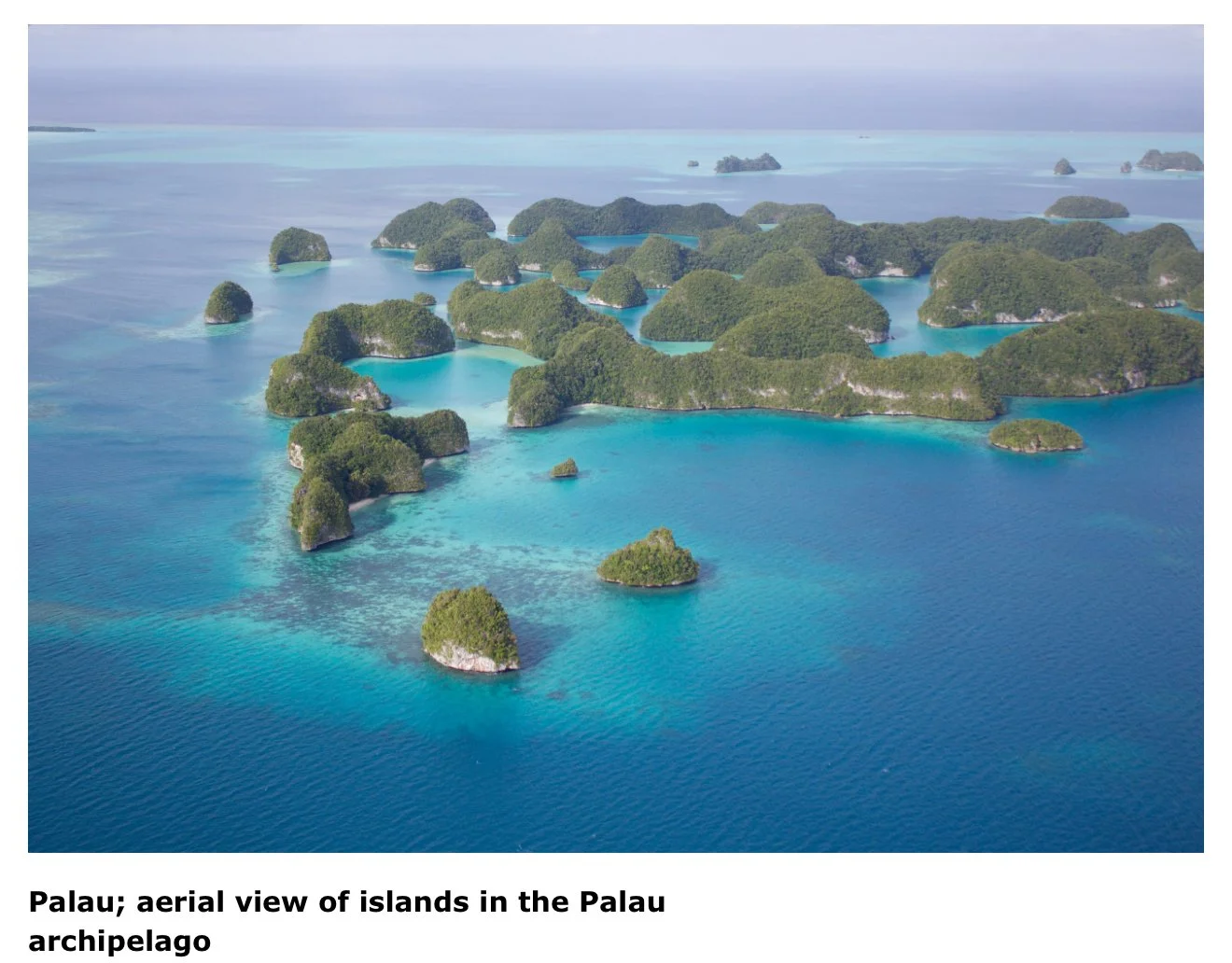

There’s a small island nation in the western Pacific that quietly rewrites what it means to be a traveler. You won’t find a McDonald’s. You won’t see cruise ships lined up offshore. And when you arrive, the first thing you’ll do isn’t grab your luggage — it’s sign a promise.
Welcome to Palau, the only country in the world that requires visitors to take an environmental pledge stamped right into their passport. It’s a vow to protect their coral reefs, respect their traditions, and leave behind nothing but footprints that will wash away.
✈️ Getting There
Palau sits between the Philippines and Guam — remote, pristine, and worth every mile.
• From Newark (EWR): expect about $1,400–$1,600 round trip, connecting through Manila or Tokyo.
• From Los Angeles (LAX): usually $1,100–$1,400 round trip, with one or two stops via Honolulu, Guam, or Taipei.
It takes time to get there, but that distance is what keeps Palau special — it’s the kind of destination you earn.
🏝️ Staying There
Luxury in Palau doesn’t come in towering hotels — it comes with quiet beaches, world-class diving, and warm island hospitality.
• Mid-range hotels: $150–$250 per night.
• Upscale resorts: $300–$500 per night with ocean views, spas, and private lagoon access.
Most are on Koror Island, the lively heart of the country, where restaurants and dive shops line the waterfront.
🍍 Eating There
Island food blends local catch with Asian influences — think grilled tuna, coconut curries, and fresh fruit.
• Local meals: $10–$15
• Nicer restaurants: $50–$75 for two
It’s easy to eat well and eat fresh; everything feels tied to the sea.
🤿 What to Do
Palau is one giant natural aquarium:
• Jellyfish Lake – swim among thousands of non-stinging golden jellyfish.
• Blue Corner Wall – one of the most celebrated dive sites on earth.
• Rock Islands Kayaking – emerald limestone formations surrounded by turquoise lagoons.
• WWII Wreck Dives – haunting relics from the Pacific campaign.
• Cultural Tours – meet locals, visit traditional bai (meeting houses), and learn why respect runs deep here.
🌦️ When to Go
The dry season (Nov–Apr) brings calm seas and blue skies.
Shoulder months (May–Jul, Oct) offer slightly lower prices and lighter crowds — perfect for explorers who like value with their adventure.
💡 Why Palau Belongs on Your List
It’s not just another beach. It’s a mindset. Palau reminds travelers that paradise still exists — and that protecting it is part of the experience.
When a country greets you with a promise, you know you’ve arrived somewhere extraordinary.
And when you leave, it’s hard not to feel changed.
Because #JoeKnows… sometimes the farthest places take you closest to what travel is really about
Photos are for inspiration only and not my own. Credit to the rightful owners.
Friday- Early Morning Travel Report: Newark Airport, 5:48 AM

Left home at 3:30 AM and arrived at Newark Airport around 4:27. Parked at The Spot, waited 11 minutes for the shuttle, and reached the check-in area at 4:56 — just four minutes before the baggage cutoff for my 6:00 AM flight.
Thankfully, TSA PreCheck and CLEAR were a breeze this morning. Lines were short, new equipment either all facial recognition were available, staff were courteous, and the process moved quickly. It was smooth sailing — at least for now-
But this is Day 1 of the 10 percent flight reduction affecting TSA and air traffic operations as the government shutdown drags on and federal employees continue working without pay. The effects may not be visible yet, or this morning but they will build as the day and weekend goes on.
#TravelTip
If you’re traveling soon, plan extra time, stay calm, and thank those TSA and airport personnel who are still showing up and keeping the system moving despite the uncertainty.
#TravelTips #Aviation #GovernmentShutdown #TSA #AirportOperations #JoeKnows #incentiveTravel #AskMrLipman
United Airlines Adjusts Service Amid FAA-Directed Reductions

Please be aware that due to the ongoing government shutdown, the FAA and DOT have instructed all U.S. airlines to reduce flight schedules across 40 major airports.
I’m traveling tomorrow… How about you?
United Airlines CEO Scott Kirby announced that while these cuts begin Friday, November 7, the airline will prioritize safety above all else — maintaining full operations on long-haul international routes and hub-to-hub service between Chicago, Denver, Houston, Los Angeles, Newark, San Francisco, and Washington Dulles.
Kirby emphasized transparency and flexibility:
Passengers will be notified promptly if flights are canceled.
The United app remains the best tool for real-time updates and rebooking.
Travelers who prefer not to fly during this period may request full refunds, even on non-refundable or basic economy fares.
Despite the adjustments, United expects to operate around 4,000 flights daily, offering more available seats than the peak summer period.
“No matter what environment we’re operating in, United will not compromise on safety,” said Kirby.
A balanced, transparent message from the top — steady leadership in a turbulent time.
#AviationNews #UnitedAirlines #TravelIndustry #Leadership #JoeKnows
Let’s Wake Up the Senior Spirit: One Story, One Smile, One Chapter at a Time
I was just thinking out loud....
Let’s Wake Up the Senior Spirit: One Story, One Smile, One Chapter at a Time
By Joe Lipman | Summit Management Services
Sometimes, all it takes to wake up the heart is a good story — your own.
For years, many of our parents and grandparents have carried extraordinary memories tucked away: moments from their childhood, their first job, their wedding day, the birth of a child, the funny neighbor, the miracle, the heartbreak, the triumph. These are the stories that shaped us — and it’s time they were told, shared, and celebrated.
The New Morning Routine: Sit, Reflect… and Let ChatGPT Help
You don’t have to be a writer to tell your life story — you just need to start talking.
Today’s technology makes it easier than ever. With tools like ChatGPT, seniors can simply sit back, speak their memories, and let the words flow.
They can:
Dictate or type their memories and ask ChatGPT to help organize them into chapters.
Send one short story each day to children, grandchildren, or friends — “A Chapter a Day.”
Watch those stories grow into a book, a family history, or even a movie script that keeps their legacy alive.
No deadlines. No stress. Just gentle storytelling — one memory at a time.
Add Photos — and Watch the Magic Happen
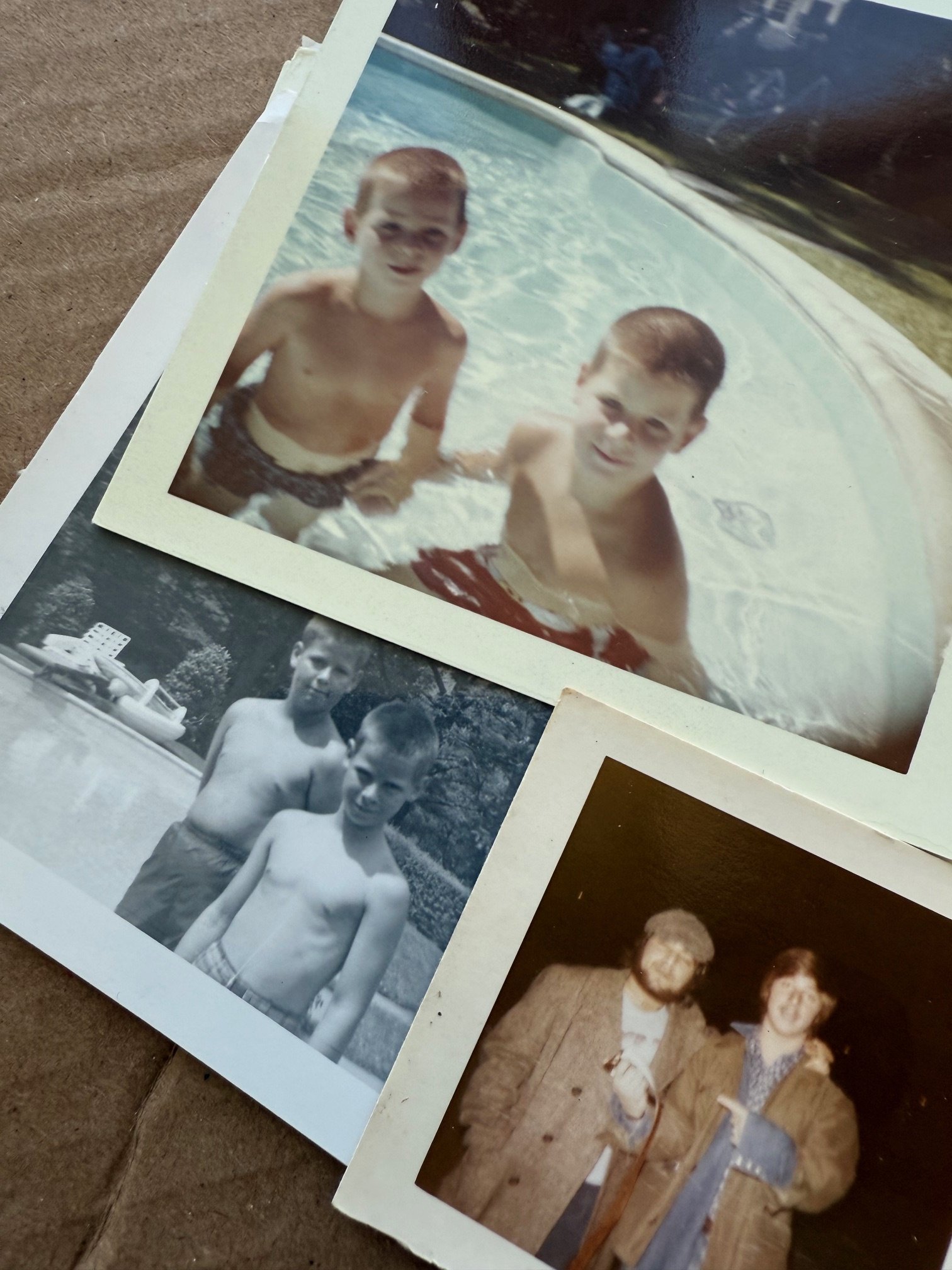
Bring them old photos. You know — all the people you don’t know, but would be nice if you did.
Pull out those boxes of black-and-white snapshots: the ones of grandparents on porches, aunts and uncles at weddings, or family picnics in places nobody remembers. Those pictures are the keys to a hidden library of stories waiting to be told.
Now, hand them the photo. Turn on ChatGPT and simply ask:
“Tell me a story about this picture — who are they, where was it taken, what was happening?”
Watch the expression on their face change as memories start to unfold — names, places, laughter, details that might have been buried for decades.
Then, take a snapshot of that photo with your phone or tablet, and type or paste their memory underneath it. Send it to family, friends, or coworkers. One picture at a time, you’re creating a living, breathing family history gallery.
Imagine how that changes a life — theirs and yours.
How to Get Started
Here’s a simple daily plan that works at home or in any senior facility:
Day 1: Pick one memory — a person, place, or event that made you smile.
Day 2: Describe it in a few sentences, then ask ChatGPT:
“Help me turn this memory into a story about my childhood.”
Day 3: Send that story to family or friends.
Day 4: Repeat with a new topic — memories, school, love, travel, work, or lessons learned along the way.
Within weeks, you’ll have a collection of stories and photos that bring your family history to life.
Family & Facility Involvement
This is where the magic multiplies. Families and caregivers can:
Set up a shared folder or email chain to collect each “chapter.”
Read stories aloud during visits or community gatherings.
Add old photos or build a wall collage with printed memories underneath.
Create a “Memory Wall” where new stories are displayed weekly.
Facilities can host “Story Hours” — time set aside for residents to share, listen, and laugh. These sessions turn a quiet afternoon into a community of living history.
Beyond the Book: Building the Legacy
What begins as a few stories can grow into:
A family tree, complete with photos and stories.
A documentary-style video, recorded on a tablet or phone.
A digital scrapbook of handwritten letters, recipes, or traditions.
A community anthology, where several seniors contribute chapters to one collective story — “The Town We Built.”
Each project becomes a bridge between generations — proof that our history isn’t just what happened, it’s what’s remembered.
Laughter, Connection, and Purpose
Storytelling and photo sharing bring more than nostalgia. They spark laughter, sharpen memory, and give seniors a reason to look forward to tomorrow’s story.
It reminds them — and all of us — that their lives still shape ours every day.
Final Thought
Let’s make this a movement.
Help seniors wake up the storyteller inside them.
Help families collect the memories that might otherwise be lost.
And help facilities embrace creativity, humor, and technology as tools for joy.
Because every senior has a story worth telling — and now, we finally have the tools to make sure it’s never forgotten. Teach our Seniors how to have fun without giving them an Amazon account.
#JoeKnows #SeniorLiving #Storytelling #FamilyHistory #LegacyBuilding #AgingWithPurpose #CommunityCare #IwishMomandDadHadThis #HistoryIsBeingRewritteInRealTime #HistoryIsBeingWritteInRealTime
After the Storm: Standing with Jamaica

This was an extremely tragic week for the Caribbean. A powerful Category 5 hurricane made a direct and devastating strike on the beautiful island of Jamaica, leaving behind widespread destruction, heartbreak, and uncertainty for so many families and communities.
As we watched this experience unfold, it brought back vivid memories of our own Category 5 Triple Storm — Superstorm Sandy — which ravaged the New Jersey shore more than a decade ago. For those of us who lived through it, the sights and sounds are still impossible to forget: the relentless wind, the darkness, and the quiet that followed. We remember what it feels like to lose power, property, and peace of mind all at once — and we remember how long the recovery really takes.
Today, we can certainly sympathize with the people of Jamaica and everyone touched by this disaster. Many have lost homes, businesses, and loved ones, and now face the long, painful process of rebuilding what was swept away in a matter of hours.
In the coming days, we’ll share more information about:
Current airport conditions and flight operations
Hotel closures and restoration updates
The state of tourism and local infrastructure
Ways travelers, suppliers, and partners can help
The Caribbean has always been one of the world’s most welcoming destinations — and Jamaica, in particular, has a warmth and resilience that has touched countless travelers over the years. Now it’s our turn to stand with them, to stay informed, and to help however we can.
Traveler Impact and Support Resources
The recent Hurricane Melissa — a Category 5 storm that struck Jamaica on October 28, 2025 — has had significant repercussions for travelers, hotels, and the island’s infrastructure.
What We Know So Far
All major international airports in Jamaica have reopened to commercial flights, but operations remain affected while damage assessments continue (AP News).
The death toll is rising; as of early November it has passed 30 and may increase further.
Many hotels and resorts are still undergoing repair, especially in the western and southwestern parts of the island (Half Moon Resort).
Travelers already in Jamaica are reporting extended stays and disruptions due to flight cancellations or hotel closures (WRAL News).
If You Have Upcoming Travel or Bookings
Contact your airline or travel agent immediately to confirm flight status and departure/arrival capability.
Reach out to your hotel or resort to verify whether it is fully operational, partially closed, or offering special terms/refunds due to the storm. For example, Half Moon Resort is offering flexible options for booked stays through December 15, 2025 (Half Moon Policy).
Review your travel insurance or booking terms: Many providers offer coverage for natural-disaster disruptions. If you did not purchase insurance, you may bear the cost of extensions, cancellations, or alternate arrangements (WRAL Coverage Guide).
If you are already on the island and departure is delayed, stay in touch with your hotel — many resorts are sheltering guests and coordinating logistics.
For trips scheduled later in the season, consider postponement or re-booking; some resorts are offering credits or flexible policies due to ongoing restoration.
Keep an eye on local infrastructure reports: even with airports open, road access and utilities may still be limited in some regions.
For additional destination-specific guidance, see The Times Travel Advisory.
Ways to Support the Recovery
Consider rescheduling travel for later in the year when safe — continued visitation helps sustain jobs and rebuild the economy.
Support local relief funds like Half Moon’s Spirit Fund, created for staff and families affected by the storm.
Purchase from local vendors — crafts, tours, dining — to keep money circulating within affected communities.
Share constructive feedback or experiences with hotels, tour operators, and travel networks to help guide transparent recovery planning.
By staying informed, compassionate, and patient, travelers and professionals alike can help Jamaica heal — not just as visitors, but as partners in the long road to recovery.
Our Commitment Moving Forward
In the wake of this devastating storm, we understand that many group travel plans have been disrupted. As part of our commitment to support recovery and resilience, we are offering flexible options and dedicated assistance for group reservations affected by the hurricane. Whether you're rescheduling a wedding, corporate retreat, or family reunion, our team is here to help you rebook with ease, secure new dates, and navigate any travel adjustments needed.
We believe in the strength of Jamaica and are proud to stand by our community and guests as we rebuild together. For personalized assistance, please reach out to Joe Lipman, President, at joe@summitmgt.com — we’re here to help you move forward with confidence and care.
— Joe Lipman
Summit Management Services
#JoeKnows #IncentiveTravel #SMSBlog #TravelNews #Jamaica #HurricaneMelissa #TravelUpdates #SummitManagementServices #StayStrongJamaica
The Ultimate 125-Hour Journey — Paris to Istanbul on the Venice Simplon-Orient-Express

Few experiences in life blend history, luxury, and storytelling like this one. The Venice Simplon-Orient-Express takes travelers from Paris to Istanbul across five unforgettable nights and 125 hours of pure wonder. It’s not simply a train — it’s a time capsule rolling through the soul of Europe.
Route & Highlights
Departing September 26, 2025, from Paris Gare de l’Est, this legendary route carries guests through:
Paris → Budapest → Bucharest → Varna (Bulgaria) → Istanbul, pausing in grand capitals and along the Black Sea coast.
Day 1: Board in Paris mid-afternoon. Dinner onboard as the train glides through France toward Austria.
Day 2: Arrive in Budapest for a private city tour and an overnight stay along the Danube.
Day 3: Continue into Romania, with fine dining and onboard entertainment.
Day 4: Stop in Sinaia to explore the breathtaking Peles Castle, then travel to Bucharest for an elegant hotel stay.
Day 5: Journey through Bulgaria, pausing in Varna on the Black Sea before your final gala dinner onboard.
Day 6: Cross into Turkey and arrive in Istanbul to a Turkish breakfast and a champagne welcome.
Before and After the Journey
Start your adventure with a stay at Hotel Whistler (steps from Gare de l’Est) or indulge in true Parisian glamour at The Ritz Paris.
End it where the legend lives on — at the Pera Palace Hotel, built for original Orient Express passengers, or the Four Seasons Sultanahmet, just steps from Hagia Sophia and the Blue Mosque.
Pricing & Exclusivity
Historic Cabins begin around US $24,100 per person, while opulent suites can exceed US $48,000–$80,000, offering private en-suite baths, personal service, and 1920s Art Deco elegance.
Watch the Journey
Click here for the video: https://tinyurl.com/26a2ect4
Why It Belongs on Your Incentive Travel List
For corporate leaders and incentive planners, this voyage defines experiential reward — combining cultural discovery, exclusivity, and the artistry of travel itself. It’s a perfect example of how luxury experiences can inspire teams, strengthen loyalty, and turn recognition into lifelong memory.
At Summit Management Services, we design custom incentive programs that elevate success into story — where every journey, from Paris to Istanbul or beyond, reflects the people and purpose behind it.
📩 Plan your next incentive journey with Summit Management. Let’s turn performance into experience — and travel into legacy. Call Joe 973-390-1736
#JoeKnows #IncentiveTravel #LuxuryEvents #SummitManagement #ParisToIstanbul #OrientExpress #CorporateIncentives
When Time Is Tight For Putting Your Meeting Together, We Build It Anyway

Tough meetings feel a lot like building a house: by the time approvals land, the clock is already ticking. That’s when someone has to step up, own the plan, and deliver—on time and on budget. That’s what Summit Management does.
How we mobilize fast:
Rapid intake & scoping: same-day requirements, priorities, and constraints.
One captain, many crews: single point of contact; logistics, AV, content, registration running in parallel.
Production-first mindset: templates, checklists, and vendor networks ready to go.
Live QA: real-time testing of agendas, decks, signage, and attendee flows.
Budget discipline: transparent estimates, change logs, and hard holds on critical path items.
Daily stand-ups: issues solved before they become delays.
What you can tap us for—à la carte or end-to-end:
Air travel budgeting & optimization (routes, classes, waivers, name changes, group contracts).
Contract review & negotiation (hotel, AV, venues) with clear risk flags and savings options.
Direction-only consulting if you just need a seasoned hand to evaluate, right-size, and steer.
Result: clean execution under pressure—rooms, run-of-show, registration, ground, F&B, and onsite support—so your team focuses on outcomes, not firefighting.
If you need a meeting turned around quickly—and done right—Summit will get it built.
Joe Lipman
Summit Management Services / Cedar Grove Travel Inc.
973-390-1736
#InvestigatorMeetings #Meetings #Incentive #AskMrLipman #AskRob #AskClaudette #JoeKnows
Europe’s Entry–Exit System (EES) Is Live: What Travelers Should Expect Now
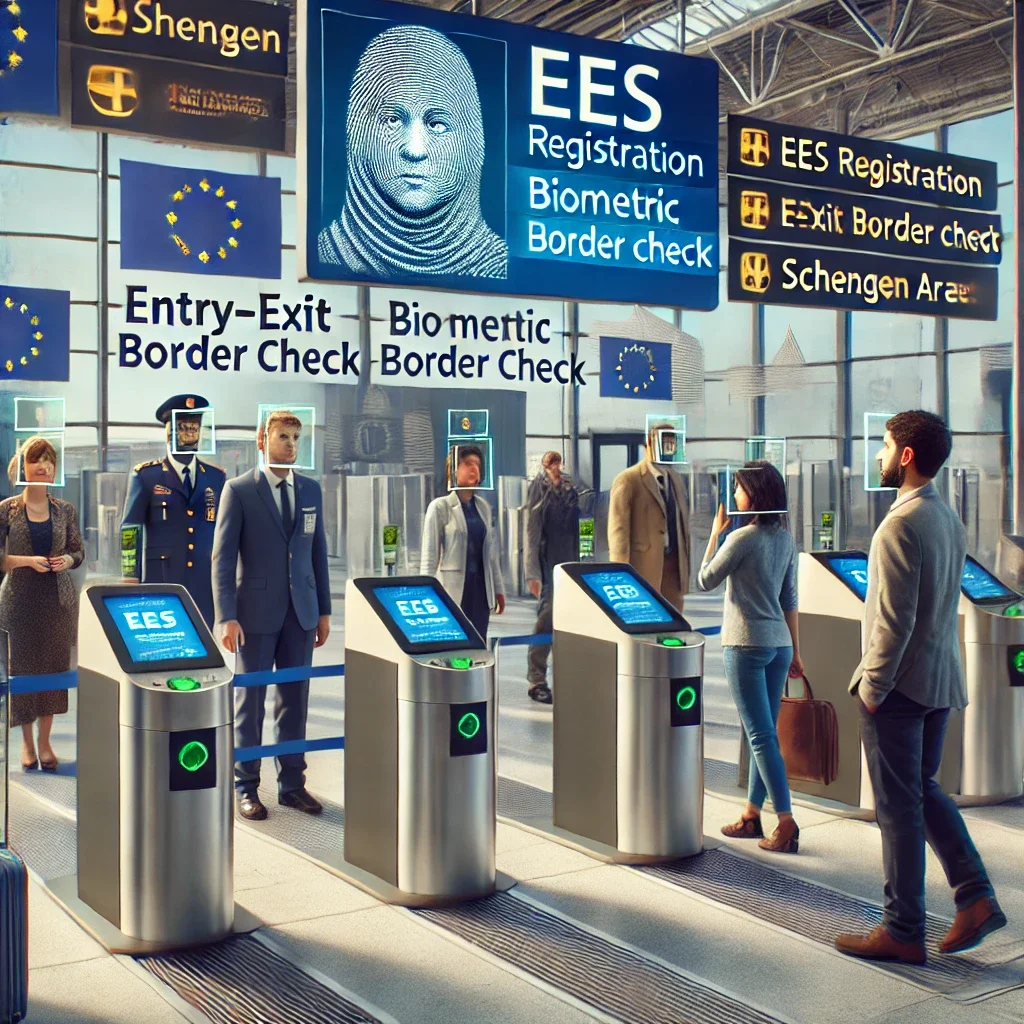
After several delays, the EU’s Entry–Exit System (EES) launched 12 October. It introduces biometric border checks for all non-EU travelers entering the Schengen area.
What happens at the border
First trip after launch: You’ll register fingerprints and a facial image on arrival (visa-free travelers included).
Children under 12: Photo only; no fingerprints.
Later trips: Automated facial recognition should clear most travelers in under two minutes—no more manual passport stamps once fully deployed.
Where and when it applies
EES will replace passport stamping across 29 participating countries. Ireland and Cyprus are not part of EES.
The system is free for travelers and is slated to be fully operational by 10 April 2026 at international airports, major land borders, and seaports.
Rollout varies by country. Prague is currently the largest hub running EES end-to-end, though reports note queues up to 90 minutes during the transition.
Why the EU is doing this
EES will automatically track the 90/180-day rule for visa-free visitors, tightening overstay controls while aiming to speed up compliant travelers.
What’s next: ETIAS
The European Travel Information and Authorization System (ETIAS) is planned for late 2026.
Travelers from visa-exempt countries will complete an online form and pay €20. Approvals last three years or until the passport expires, whichever comes first.
Together, EES now and ETIAS later are designed to deliver stricter control with smoother flows once fully in place.
The Power of AI and the New Way We Navigate IMEX
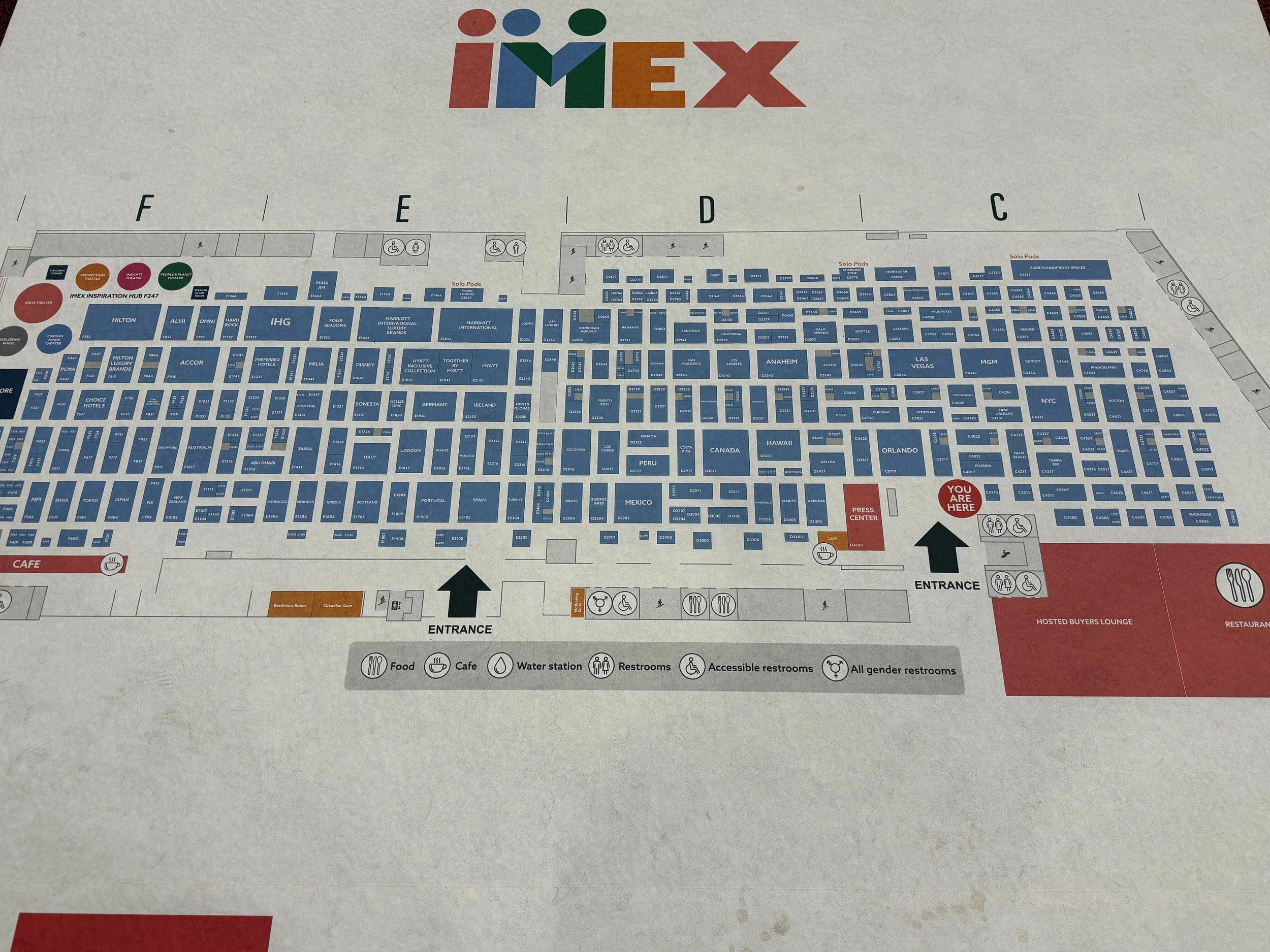
This year at IMEX America, I realized something the moment I looked at the floor plan — booth E2352 to booth C4834 looks like a short stroll on paper, but in real life it’s a maze of aisles, conversations, and opportunities.
And since the Internet was unreliable and the mapping feature on the app didn’t work well, having an offline version of the map turned out to be a lifesaver. It reminded me that even with all our technology, having smart, accessible tools — powered by AI or not — can make all the difference in how we move through a complex environment.
That moment really drove home how AI is transforming our industry. Whether it’s tracking who you’ve met, transcribing notes in 27 languages, or guiding attendees from Hilton to Hyatt faster than ever, artificial intelligence isn’t just a tool anymore — it’s a practical partner for productivity, hospitality, and clarity.
Here’s a short list of the real-world ways AI is already reshaping meetings, incentives, and hospitality management today:
• Note Taking & Summaries: Instant meeting recaps, multilingual transcripts, and searchable archives of what really mattered — all done in seconds.
• Session Moderation: Automated Q&A handling, live polling, and sentiment tracking.
• Hospitality Desk & Escorting: AI concierges that help attendees find sessions, answer questions, or provide walking directions across venues.
• Signage & Directional Updates: Smart signage that adjusts in real time — no more printed last-minute changes.
• Budgeting & Forecasting: Predictive analytics that flag overages and forecast travel or F&B costs more accurately.
• Presentation Design: Generative tools that create visuals, storylines, and branded slides in minutes.
• Attendance Analytics: Automated check-in and data visualization tools that show attendee flow and engagement.
Have you noticed how few business cards were exchanged this year?
The new IMEX badge system was a huge step forward — quick scanning, instant data exchange, and built-in note-taking capabilities that made it easier to keep track of who you met and what you discussed. For anyone trying to stay organized after a long day of networking, that feature alone was a game-changer.
From booth E2352 to C4834, what seemed like a simple path across the convention floor became a reminder that AI — like a great map — helps us find our way through the noise.
At Summit Management Services, we’ve spent decades navigating the details that make meetings, incentives, and global programs succeed. What’s exciting now is how AI is giving us new tools to do it smarter — saving time, improving accuracy, and allowing our teams and clients to focus on what really matters: connection, creativity, and results.
Let’s keep the conversation going — how are you using AI in your event planning or travel management process?
— Joe Lipman
Summit Management Services
#JoeKnows #MeetingPlanning #SummitManagementServices #IncentiveTravel #AskMrLipman #AskRob
Shaka Guide: Turning Road Trips Into Storytelling Adventures
If you’ve ever driven through a national park or scenic byway and wondered about the stories behind the landscapes, the Shaka Guide app (https://www.shakaguide.com) is one of the best travel companions you can have. It’s not just navigation—it’s like having a local guide sitting in the passenger seat, pointing out the hidden history, legends, and sights you might otherwise miss.
What Shaka Guide Offers
Shaka Guide works through downloadable audio tours, triggered by GPS as you drive. The app automatically plays stories, directions, and travel tips based on where you are, which means you can keep your eyes on the road while still learning about the world around you.
The narration is engaging and lighthearted—part history, part storytelling, part practical advice. You’ll learn details you’d never find in a traditional guidebook: from geological wonders to quirky local legends, and even the best spots to pull over for photos or short hikes.

Recent Experiences in Utah’s National Parks
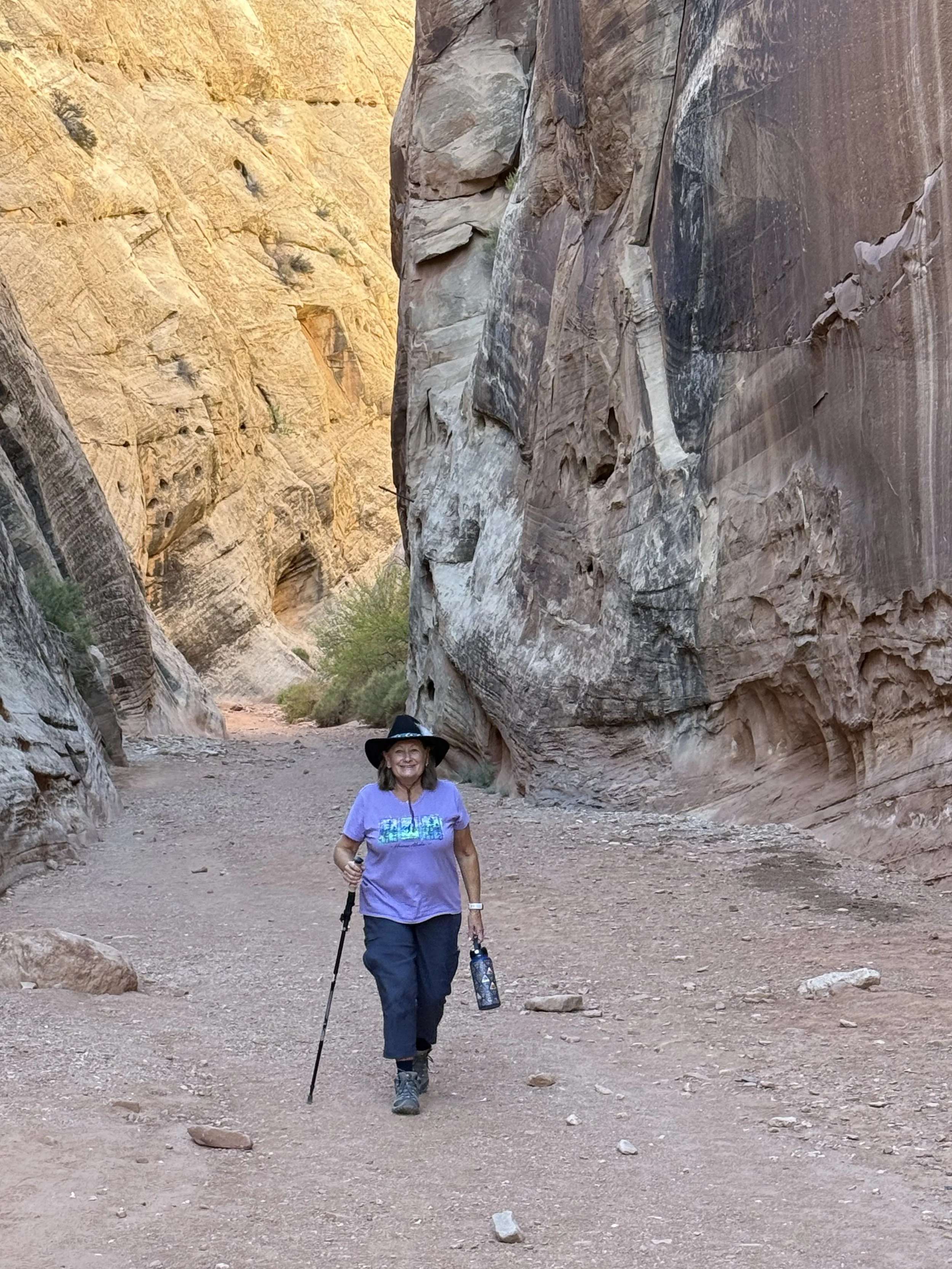
Just yesterday, I used Shaka Guide while exploring Bryce Canyon, and today at Capitol Reef. The commentary completely changed the way I saw these places. Instead of just staring at cliffs and rock formations, I was listening to how they formed, what they meant to early inhabitants, and how travelers in the past might have experienced them.
The best part? The app never feels like a lecture. It’s conversational and fun, often mixing humor with cultural tidbits and practical driving directions.
Beyond the Mainland: Hawaii and More
My first introduction to Shaka Guide was in Hawaii, where it’s especially popular. Driving the Road to Hana or exploring the Big Island with the app made the trip feel richer, more immersive, and far more connected to the culture. Ever since then, I’ve been on the lookout for their tours everywhere I travel.
Why Travelers Should Try It
• Affordable – Much cheaper than hiring a private guide.
• Flexible – Start and stop whenever you want.
• Informative – Learn hidden history, culture, and nature facts.
• Offline Ready – Download the tours ahead of time so you’re covered even in areas with no signal.
Shaka Guide has turned my drives into experiences I’ll remember. If you’re heading to a national park, Hawaii, or any destination where they offer tours, I highly recommend downloading the app before you go.